



Matrix News
Article

Published July 10, 2026
Matrix Welcomes Eight Research Teams for 2026-2027
Social Science Matrix is pleased to welcome eight new Matrix Research Teams — three faculty-led teams and five graduate student-led teams — for the 2026-2027 academic year. The teams will address topics such as the political economy of wildfire risk, the global politics of declining fertility, and the use of digital tools for governance and development in South Asia.
Learn More >Research Highlights
Article
Published December 27, 2014
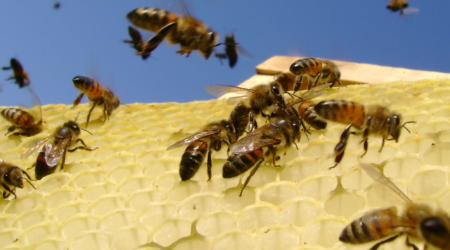
Bee Killers
The bodies and behaviors of bees have been dramatically transformed by human beings—including the U.S. military—according to UC Berkeley geographer Jake Kosek.
Learn More >Research Highlights
Article

Published December 20, 2014
Brain Exercise and Alzheimer’s
A postdoctoral fellow at UC Berkeley investigated whether a lifetime of cognitive exercise could mitigate the risk of Alzheimer’s disease.
Learn More >Research Highlights
Article

Published December 17, 2014
Africa’s AIDS Industry
Efforts to prevent the spread of AIDS in Africa tend to follow the same script, even though the methods are largely ineffective, according to a paper co-authored by a UC Berkeley sociologist.
Learn More >Research Highlights
Article
Published December 9, 2014
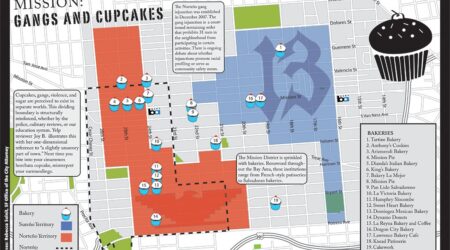
A New World of Mapping
UC Berkeley cartographer Darin Jensen is exploring novel ways to detail information about the world around us.
Learn More >Research Highlights
Article

Published December 8, 2014
From Oil to Soil
Research by UC Berkeley geographer Adam Romero exposes how the toxic byproducts of petroleum have transformed agricultural production in California and around the world.
Learn More >Research Highlights
Article
Published December 7, 2014
Solving the Mysteries of Brain Waves
In laboratories across the UC Berkeley campus, researchers are unlocking some of the mysteries surrounding "neural rhythms," the pulses, bursts, and waves of electricity that continually surge through our brains.
Learn More >