



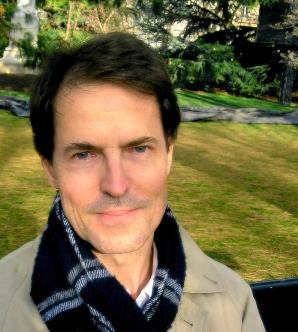
This talk will feature Rogers Brubaker, Distinguished Professor of Sociology at UCLA, who will discuss a chapter of his recent book, Hyperconnectivity and Its Discontents. The talk will focus on the chapter “Politics,” addressing the epistemic, emotional, and organizational questions that digital hyperconnectivity imposes on governance, and the resulting tensions between democracy, populism, and technocracy.
The talk is sponsored by the Social Effects and Normativity of Data-Mining, Algorithms, and the Digital Economy Research Team, a Social Science Matrix Research Team.
This event will be held in person.
REGISTER
About the Speaker
 Rogers Brubaker is Distinguished Professor of Sociology at the University of California, Los Angeles, where he holds the UCLA Foundation Chair. Brubaker has written widely on social theory, immigration, citizenship, nationalism, ethnicity, race, gender, populism, and – most recently – digital hyperconnectivity. His first book explored the idea of rationality in the work of Max Weber, while his essays on Pierre Bourdieu helped introduce Bourdieu to an English-speaking audience. His next two books analyzed European nationalism in historical and comparative perspective. Citizenship and Nationhood in France and Germany (1992) sought to explain the sharply differing ways in which citizenship has been defined vis-à-vis immigrants in France and Germany and helped establish what has since become a flourishing field of citizenship studies; Nationalism Reframed: Nationhood and the National Question in the New Europe (1996) compared contemporary East European nationalisms with those of the interwar period, both emerging after the breakup of multinational states into would-be nation-states. Subsequently, in a series of analytical essays, many of them collected in Ethnicity without Groups (2004), Brubaker critically engaged prevailing analytical stances in the study of ethnicity, race, and nationalism and sought to develop alternative analytical resources. These informed his collaborative book Nationalist Politics and Everyday Ethnicity in a Transylvanian Town (2006), which examined the everyday workings of ethnicity in a setting of highly charged ethnonational conflict.
Brubaker’s more recent work has taken him in new directions. Grounds for Difference (Harvard, 2015) emerged from three new lines of work, engaging three increasingly salient contexts for the contemporary politics of difference: the return of inequality, the return of biology, and the return of the sacred. The introduction can be read here.
Trans: Gender and Race in an Age of Unsettled Identities (Princeton, 2016) was prompted by the pairing of “transgender” and “transracial” in debates about whether Caitlyn Jenner could legitimately identify as a woman and Rachel Dolezal as black. The introduction can be read here. More recent work on gender includes “Exit, Voice, and Gender” (2023) and “Emerging Pronoun Practices After the Procedural Turn: Disclosure, Discovery, and Repair” (2024).
Brubaker’s work on the pan-European and trans-Atlantic populist moment includes “Why Populism?” (2017), “Between Nationalism and Civilizationism” (2017), “Populism and Nationalism” (2020), and “Paradoxes of Populism during the Pandemic” (2020).
Brubaker’s most recent book, Hyperconnectivity and Its Discontents, was published by Polity in November 2022. Treating digital hyperconnectivity as a “total social fact,” the book addresses transformations of the self, social interaction, culture, economics, and politics.
Brubaker has taught at UCLA since 1991. Before coming to UCLA, he was a Junior Fellow in the Society of Fellows of Harvard University (1988-1991). He has been awarded a MacArthur Fellowship (1994-99), a Presidential Young Investigator Award from the National Science Foundation (1994-99), and Fellowships from the Center for Advanced Study in the Behavioral Sciences (1995-96), the John Simon Guggenheim Memorial Foundation (1999-2000), and the Wissenschaftskolleg of Berlin (2016-2017). He was elected to the American Academy of Arts and Sciences in 2009.
View Map

 Patrice Douglass is an Assistant Professor in Gender and Women’s Studies at UC Berkeley. She holds a PhD and MA in Culture and Theory from the University of California, Irvine, a MA in Ethnic Studies from the University of California, Riverside, and a BA in Feminist Studies and Legal Studies from the University of California, Santa Cruz. She is also currently a Matrix Faculty Fellow.
 Márcia Ribeiro
  Matheuzza Xavier
 Catherine Ceniza Choy
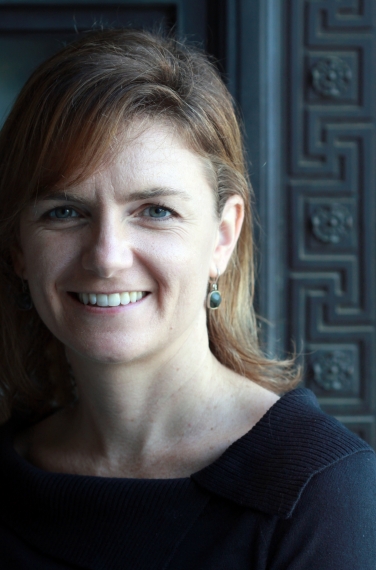 Cybelle Fox, Professor of Sociology at UC Berkeley,
 Leti Volpp
 Hidetaka Hirota

 Cameron Hu
 Nathaniel Dolton-Thornton (discussant) is a PhD student in the


 Roselyn Hsueh is a Professor of Political Science at Temple University and Visiting Scholar at the Berkeley Economy and Society Initiative. She is the author of Micro-institutional Foundations of Capitalism: Sectoral Pathways to Globalization in China, India, and Russia (Cambridge, 2022) and China’s Regulatory State: A New Strategy for Globalization (Cornell, 2011), and scholarship on states and markets and industrial policy. Her current research examines the technological intensity of trade and Chinese outward foreign direct investment, and the economic and security nexus in technology governance. She held fellowships at the University of Pennsylvania, Georgetown University, and the University of Southern California. She conducted international fieldwork as a Fulbright Global Scholar, served as a visiting professor at the National Taiwan University, and was a Fulbright visiting scholar at the Institute of World Economics and Politics (China). She received her Ph.D. from the University of California, Berkeley.
 Mark Dallas is temporarily on leave as Professor in the departments of Political Science, Asian Studies and Science, Technology & Society at Union College in New York to serve in the U.S. government. His research focuses on industrial organization, global value chains, China, industrial and technology policy and their economic and security implications. His publications cross multiple disciplines, including in leading journals in business management and technology innovation, geography and development studies. He has also worked with the World Bank in the Trade and International Integration Development Research Group, as a fellow at the Council on Foreign Relations, and at the Wilson Center. He also was the Hallsworth Visiting Professor at the Global Development Institute at the University of Manchester. All comments made are purely his own as a private citizen, and do not necessarily represent the opinions or positions of the U.S. government.
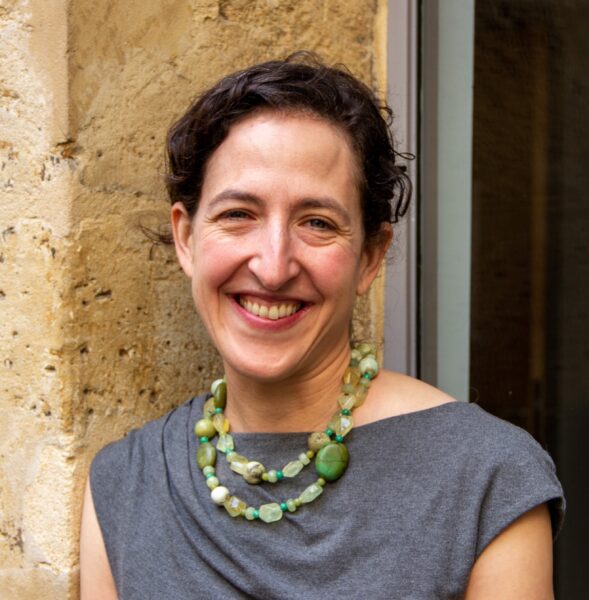 Rachel E. Stern is a Professor of Law and Political Science (by courtesy) in the Jurisprudence and Social Policy Program at Berkeley Law, where she also currently holds the Pamela P. Fong and Family Distinguished Chair in China Studies. She is the author of Environmental Litigation in China: A Study in Political Ambivalence, as well as numerous articles on legal mobilization, courts, political space and professionalization in contemporary China. Stern is currently working on a comparative project on the politics of access to legal information and the emergent market for court data in China, France and the United States, which explores how different political systems responded to the rise of big data, machine learning and natural language processing in the 2010s. She was previously a Junior Fellow at the Harvard University Society of Fellows.
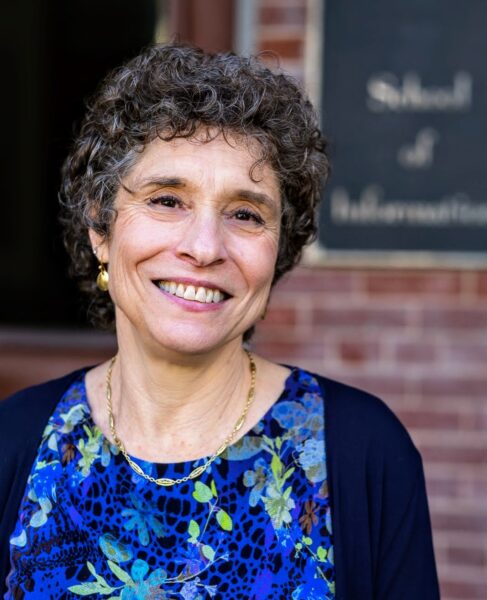 AnnaLee Saxenian is professor of information and economic development at the University of California, Berkeley. She served as dean of the School of Information from 2004-19. Her scholarship focuses on regional economies and the conditions under which people, ideas, and geographies combine and connect into hubs of economic activity. She is author of Regional Advantage: Culture and Competition in Silicon Valley and Route 128 (Harvard, 1994) and The New Argonauts: Regional Advantage in a Global Economy (Harvard, 2006) and has published widely on the geography and dynamics of industrial change. She chaired the Advisory Committee for Social, Behavioral and Economic Sciences at the National Science Foundation from 2010-15. She holds degrees from MIT, UC Berkeley, and Williams College.

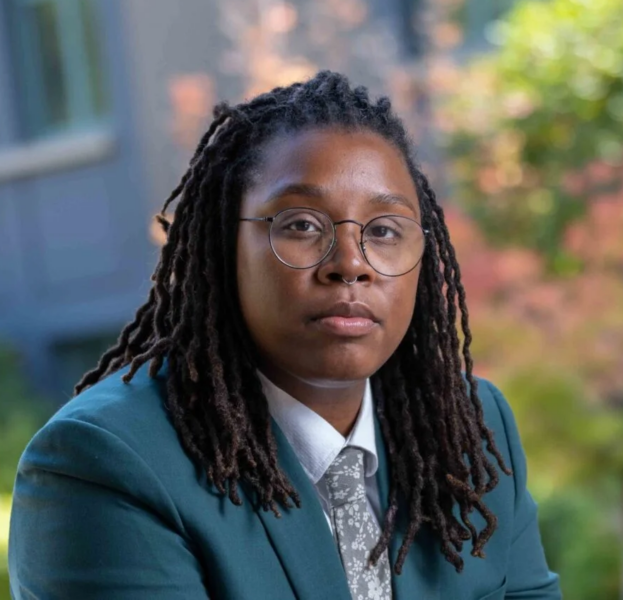 Sa-kiera “
 Joshua R. Goldstein
 Xiaoling Shu

 Native Lands
 Shari Huhndorf
 Lauren Kroiz
 Luanne Redeye
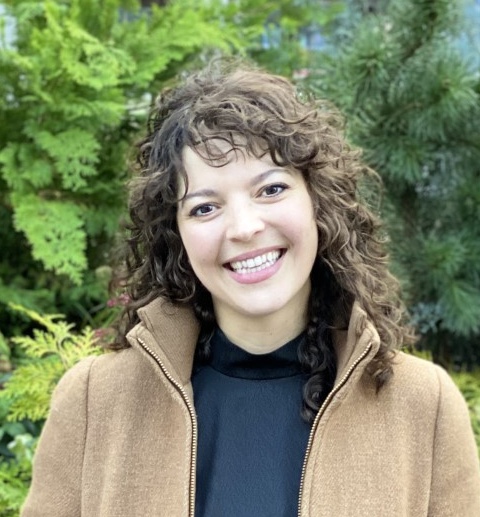 Bernadette Perez