
Grants and Opportunities

Erasmus+ Mobility Grants Awarded

EU-funded program will enable exchange between faculty, staff, and students from UC Berkeley and Freie Universität Berlin

Screen Shot 2019-08-08 at 11

Social Science Matrix is pleased to announce the recipients of the 2019-2020 Erasmus+ Mobility Grants, which provide funding for collaborative research and training between faculty members, graduate students, and staff members from the UC Berkeley College of Letters and Science and Freie Universität, Berlin (FUB), a leading research university in Berlin, Germany.

Erasmus+ grants are awarded by the European Union (EU); all mobility projects under Erasmus+ aim to help individual learners acquire skills to support their professional development and deepen their understanding of other cultures. Grants awarded to faculty and staff members enable funding for up to two weeks of exchange; grants awarded to graduate students provide up to six months of funding.

“This program is part of a growing connection between two of the world’s greatest public universities—UC Berkeley and Freie Universität Berlin,” says Maximillian Auffhammer, George Pardee Jr. Professor of International Sustainable Development at UC Berkeley, who helped initiate this new partnership. “The exchange of ideas is best achieved through the exchange of people.”

Following a cross-institutional review by a panel of faculty members and administrators, nine graduate students, faculty, and staff members were selected to receive Erasmus+ grants for 2019-2020. Grantees were selected based on a variety of factors, including academic merit and professional experience. Grants are also focused on supporting international experiences for people who have not spent significant time abroad previously.

Below are brief profiles of the successful grantees, who are listed in alphabetical order by their names, along with their home institutions and grant type (staff, faculty, or graduate research).

Oyuna Baldakova, FUB, Graduate Research

A third-year PhD candidate at the Graduate School of East Asian Studies at FUB, Oyuna Baldakova is writing a dissertation entitled, “Win-Win on the Local Level: Study of Host Countries Institutions and Linkage Effects of the Belt and Road Initiative in Kazakhstan and Kyrgyzstan.” Her research examines China’s participation in international development via its overseas investments, namely the Belt and Road Initiative (BRI), and its potential consequences for the economic development in Central Asia. She will use an Erasmus+ grant to visit UC Berkeley during the Spring 2020 semester and “interact and collaborate with leading scholars from the variety of social sciences at UC Berkeley,” while also “learning more about the North American academic life,” she wrote in her proposal. She plans to collaborate with Professor You-tien Hsing, Chair of the Center for Chinese Studies at the Institute of East Asian Studies, as well as scholars from Berkeley’s Center for Silk Road Studies, the first university center for Silk Road study in North America. “During my stay at Berkeley, I hope to enhance and finalize my dissertation project by presenting the preliminary results of my study in formal and informal settings,” Baldakova wrote in an email interview. “I believe that my stay will promote even closer cooperation between the two universities in the fields of East Asian and Eurasian Studies and provide the possibility to work on joint projects.”

Barbara Burger, FUB, Staff

A staff member with Freie Universität, Berlin’s Office of International Affairs, Barbara Burger used an Erasmus+ Mobility Grant to learn about student advising and student recruitment strategies within UC Berkeley’s Study Abroad Office. Through meeting with campus advisors in select UC Berkeley departments, as well as shadowing staff members in the Study Abroad office, she developed her understanding of how study abroad could be further integrated into the academic lives of students at both universities. “Through the training at UC Berkeley, I was able to achieve a better understanding of academic requirements at the UC for our students, which led to improvement of my skills in regard to students’ academic counseling,” Burger explained in an email interview. “During the meetings with the marketing department, it was also possible to exchange new ideas for student recruitment. For me, it was a wonderful experience and, apart from the professional outcomes, I gained insight into life on the UC Berkeley campus, from which we welcome a great number of students to our Berlin program every year.”

Julia Glathe, FUB, Faculty

Julia Glathe, a PhD Student in Sociology and a Research Fellow at the Institute for East European Studies at Freie Universität Berlin, is writing a dissertation entitled “The Contradictory Nature of Russia’s Migration Regime: Dynamics of Conflict and Development in a Non-Western and Authoritarian Context.” Her work seeks “to understand how migration as a political object is dealt with in Russian society and, thus, in a non-Western and authoritarian political context,” Glathe wrote in her proposal. She received an Erasmus+ Mobility Grant to visit UC Berkeley and work with John Lie, C.K. Cho Professor of Sociology at UC Berkeley. “In my dissertation, I examine the development and conflict dynamics of the Russian migration regime,” she wrote in an email interview. “Through my stay at UC Berkeley and the exchange with other migration researchers, I hope to be able to better classify the Russian case by comparing it with other immigration states: What distinguishes an authoritarian from a liberal migration regime? To what extent do conflict dynamics resemble and differ? I see the events of the Berkeley Interdisciplinary Migration Initiative (BIMI) as particularly profitable to advance my project.”

Stefan-Ludwig Hoffmann, UC Berkeley, Faculty

As Associate Professor of History at UC Berkeley, Stefan-Ludwig Hoffmann’s research centers on an examination of global history through the concept of time. Drawing upon the work of German historian Reinhart Koselleck, Hoffmann is exploring the “synchronicity of the non-synchronous,” a term used to “explain the popular appeal of Nazism for those social classes in Weimar Germany considered to be ‘out of sync’ with the particular historical stage of late capitalism.” Hoffmann received an Erasmus+ Grant to collaborate with Sebastian Conrad at the Freie Universität Berlin’s Center for Global History, who is “one of the leading global historians in the world today,” according to Hoffmann. “I plan to share a first draft chapter with him and other colleagues at the FU’s Center for Global History. In addition, we intend to use my research stay at the FU to sketch out a possible collaborative project for a large UCB-FU research grant on ‘Global Temporalities,’ involving students and faculty at both institutions.”

Seth Holmes, UC Berkeley, Faculty

Seth M. Holmes, Associate Professor of Medical Anthropology and Public Health at UC Berkeley, will use an Erasmus+ Mobility Grant to develop a working group of social scientists who work on mobility, migration, health, and inclusion/exclusion. Holmes will present his research on Indigenous Mexican immigrant youth in the United States at FUB’s Institute of Social and Cultural Anthropology, and organize a future workshop entitled “Migration, Health, Markets and Inclusion/Exclusion,” with an eye toward developing a special theme journal issue and grant application for ongoing work. “We will consider national and transnational markets, forced immigration and medical tourism, and finally citizenship and ethnicity segmented labor markets and their potential production of health, sickness, and disease,” Holmes explained in his proposal.

Jordan Jacobs, UC Berkeley, Staff

As Head of Cultural Policy and Repatriation for UC Berkeley’s Phoebe A. Hearst Museum, Jordan Jacobs is responsible for ensuring that the museum adheres to ethical standards and regulations related to the acquisition and management of cultural objects. Jacobs received an Erasmus+ Mobility Grant to collaborate with representatives from Berlin’s new Humboldt Forum Museum and the Dahlem Museums, whose collections largely date to German’s colonial era. “The world’s museums have reached in an inflection point in the realm of cultural policy,” Jacobs wrote in an email interview. “Both UC Berkeley and the Freie Universität are now central to a revived, international conversation about collecting ethics and colonialism, which requires—but does not always inspire—nuance, negotiation, and good faith attempts to mitigate between multiple, often contradictory worldviews…. I am grateful for the opportunity to examine these issues with my colleagues in Berlin, with a goal of developing best practices.”

Yan Long, UC Berkeley, Faculty

Yan Long, Assistant Professor of Sociology at UC Berkeley, researches the evolution of international institutions and how they shape conflict among local communities and states. Long received an Erasmus+ Mobility Grant to collaborate with scholars at Freie Universität, Berlin’s Institute of Chinese Studies, as she is building a network of researchers around the world to conduct comparative cross-city research to shed light on the consequences of civic life for the vitality of urban areas. “The visit will help me to develop international collaborative working relationships with the vibrant scholarly community of civil society and state studies involving multiple disciplines at FUB,” she wrote.

Franziska Neudeck, FUB, Staff

UC Berkeley and FUB are home to two of 352 global libraries that have been designated as “United Nations Depository Libraries,” which manage the distribution of United Nations documents and publications to users around the world. Franziska Neudeck, a staff member in the Acquisition Department & Subject Cataloguing Team at Freie Universität, Berlin’s University Library, used an Erasmus+ Mobility Grant to collaborate with UC Berkeley staff and learn about the UC library system, including how it fulfills its role as a UN Depository Library. During her visit, she focused on comparing and contrasting the different work processes used in the libraries, and on collaborating with colleagues like Jim Church, UC Berkeley’s Librarian for Economics and International Government Information. “For me as a librarian from Germany, the Erasmus+ Mobility Grant was a great experience, and it gave me the chance of a lifetime to evolve personally and professionally at a unique campus of the UC,” Neudeck said in an email interview. “I learned a lot from the colleagues in Berkeley during my stay and they supported me in every way, first of all Jim Church. This opportunity for new insights will have a lasting effect on my future work.”

Mariel Supina, UC Berkeley, Graduate Research

A third-year doctoral student in mathematics at UC Berkeley, Mariel Supina studies algebraic combinatorics and discrete geometry. “Algebraic combinatorics is a field in which techniques from abstract algebra are used to enumerate objects of interest,” she explained in her proposal. “Discrete geometry involves the study of polytopes, or high-dimensional shapes with flat sides.” She will use an Erasmus+ Mobility Grant to work with the discrete geometry group at FU Berlin, which she explained in her proposal is “one of the world’s top locations” for her field of research. She is also interested in supporting efforts to promote equity and inclusion in faculty hiring, admissions, and the graduate program at FU Berlin. “I am very grateful for the Erasmus+ Mobility Grant for giving me the opportunity to get to know my colleagues in the Discrete Geometry group at FU Berlin,” Supina wrote in an email. “I am looking forward to beginning new mathematical collaborations with other graduate students.”

Visit this page to learn more about this year’s grant process, and subscribe to the Matrix newsletter for updates on future opportunities to participate.
Marion Fourcade, Michael Watts to Serve as Directors of Matrix

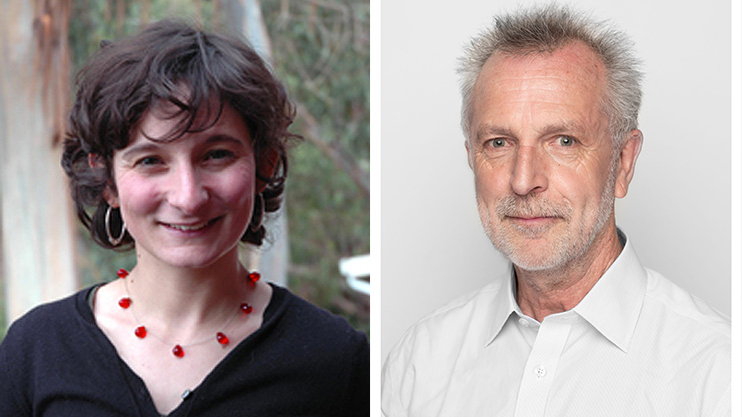
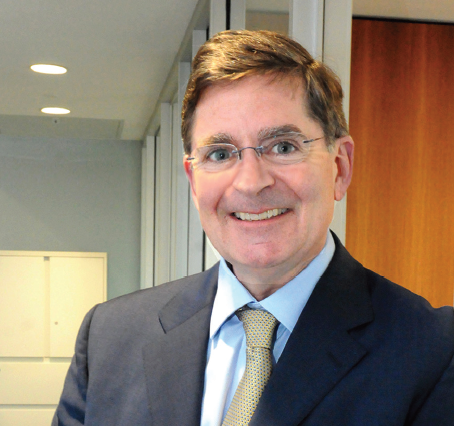
Following Bill Hanks' successful six-year tenure, Marion Fourcade, Professor in the Department of Sociology, will serve as Director of Social Science Matrix. Professor Michael Watts will serve as Interim Director until July 2020.

marion_michael

We are pleased to announce that Marion Fourcade, Professor in the Department of Sociology, has been appointed Director of Social Science Matrix. She will assume the role previously held by Professor Bill Hanks, who stepped down following a successful six-year term as the center’s founding director.

During the 2019-2020 academic year, Fourcade will serve as Distinguished Visiting Professor at the Institute of Advanced Study at Princeton University, and so will begin her term at Matrix on July 1, 2020. In the interim, Michael Watts, Professor Emeritus of Geography, will serve as the Director of Matrix for the forthcoming academic year, effective July 1, 2019.

Bill HanksUnder Hanks’ leadership, Social Science Matrix has established itself as an important resource for the UC Berkeley social science community, hosting hundreds of conferences, workshops, symposia, book discussions, and distinguished lectures by prominent scholars, and convening more than 70 Matrix Research Teams, interdisciplinary groups of scholars who gathered to pursue early-stage research focused on emerging social science questions and tackling globally significant issues like climate change, immigration, and artificial intelligence.
Among its many activities, Matrix has also hosted three cohorts of Dissertations Fellows; established a network of 25 Affiliated Centers across campus; and forged important international partnerships, creating bilateral exchange programs with Sciences Po in Paris and Freie Universität, Berlin.

“Working with Carla Hesse, former Dean of the Social Sciences Division, Bill [Hanks] formed Matrix into a cutting-edge research institute that responded to the particular needs of Berkeley’s social science community,” said Kim Voss, Acting Dean of the Division of Social Sciences, in an announcement. “As an incubator and accelerator for early-stage research and a platform for cross-disciplinary collaboration, Matrix has attained national distinction under Bill’s leadership and emerged as a singular entity on campus. A linguistic anthropologist with deep historical commitments, Bill’s ability to fruitfully complicate the intellectual contours that undergird disciplinary thought has indelibly shaped Matrix and its mission.”

Professor Fourcade is well poised to build on this foundation, as she brings an exceptionally strong understanding of Matrix’s role within the division and a clear vision of how to expand the impact of its programs and initiatives. Fourcade served as Interim Director of Matrix in 2018, when she launched initiatives such as the Solidarity Series, a series of talks and panels focused on exploring and critiquing the ethical foundations, concrete implementations, and prospective designs that have fostered (or may foster) connectedness, inclusiveness, tolerance, and equality. She founded the Center on Economy and Morality, a Matrix-affiliated center, and she has led and/or participated in diverse Matrix Research Teams, including Seeing Like a Valley: Locating the Moral Visions of Silicon Valley Culture; Political Economy and Society Curriculum; Examining the Global Reach of Algorithms; and Work and Politics in the Digital Era.

Fourcade is “an innovative scholar whose numerous publications have taken an expansive, historical, and comparative approach to the sociology of economic knowledge, political practices, and digital society,” Voss said. “Known as a willing and resourceful collaborator, she has contributed to the work of several research centers on campus and built coalitions with scholars nationally and internationally, most notably as co-director of the Max Planck-Sciences Po Center on Coping with Instability in Market Societies. Marion is also an award-winning mentor with an established track record of championing the research of graduate students.” Fourcade’s book, Economists and Societies: Discipline and Profession in the United States, Britain, and France, 1890s to 1990s, won several awards, including the Ludwik Fleck Prize from the Society for the Social Studies of Science and the American Sociological Association’s Distinguished Book Award.

“Matrix is a unique institution,” Fourcade says. “Its mission is to serve as a catalyst of innovation in the social sciences, to foster conversations across the disciplines, and to discover new territories for research. We are deeply indebted to Bill Hanks and Carla Hesse for turning this ambitious vision into a lively reality, complete with a gorgeous physical space, a well-functioning infrastructure, and a vital intellectual role on campus.”

Marion intends to build on Matrix’s track record in serving the broader social science community for the organization of special events, workshops, and lectures, as well as in supporting innovative interdisciplinary seminars and research projects. Her priorities include increasing outreach through the cultivation of relationships with departments in the division and with other research units on campus (a model pioneered by the D-Lab/Matrix series on “social science and data science”); working with graduate students to provide intellectual support and better exposure for their research; and fostering connections to non-academic publics. “Matrix is for everyone,” Fourcade says.

Matrix’s work will be closely articulated with several of the signature initiatives on campus. “We want to focus on present-day challenges facing human societies, be they political (rising illiberalism and authoritarianism), technological (artificial intelligence, genetic modification), or ecological (climate change). As social scientists, we want to understand how these challenges transform our physical environment, our social world, and our sense of who we are; how they recycle old forms of power and marginality, but also create new ones; and how they might foster new opportunities, ideals, and aspirations. These questions all demand interdisciplinary conversations. Matrix will be actively engaged in cultivating those cross-field synergies that are already well established, while helping initiate other, less familiar ones.”

In his role as Interim Director, Professor Michael Watts will similarly bring a wealth of leadership experience to Matrix, as he formerly served as Director of the Institute of International Studies and Chair of the Trustees of the Social Science Research Council. Watts’ pioneering scholarship on the political economy of development has integrated thinking in the fields of anthropology, ecology, and sociology. He has been recognized internationally for his leadership, exemplary scholarship, and mentorship of graduate students; most recently, he was honored by election as Corresponding Fellow of the British Academy. His publications include Silent Violence: Food, Famine and Peasantry in Northern Nigeria (1983; 2013), which was a runner-up for the Herskovitz Prize, and The Curse of the Black Gold (2008). “Michael is uniquely capable of ensuring Matrix’s successful transition this year,” Voss said.

As Interim Director of Matrix, Watts says that he intends to continue to promote and fund research teams and lectures, while providing “new support for reading groups, book manuscript development for junior faculty, inter-disciplinary doctoral dissertation proposal workshops, and a venue for book launches and the chance for authors  to ‘meet their critics’ in wide ranging discussions.” He also plans to launch new event series that “speak to the current moment,” focusing on such topics as “the challenges of climate change and forms of life in the Anthropocene; the challenges associated with large-scale displacement and mobility of human populations, particularly in relation to civil conflict, war, and endemic violence (and of climate change); and, in view of the looming US elections in 2020, the broad theme of race, class, and authoritarian politics.” He also plans to “host discussions next spring, explicitly comparative in nature, drawing in our historical strength in area studies on the Berkeley campus, addressing the relations between neoliberalism, globalization, and authoritarian populisms of various stripe.”

“While the foundations for Matrix are now in place, I hope to continue and extend the yeoman work of Bill Hanks, who has developed connections, linkages, and networks among faculty and students across the social science division, while building new relations with the area studies programs, the many research centers on campus, and the professional schools, all of which have social scientists in their ranks,” Watts said. “I am delighted to be able to assist in this transitional period prior to Marion [Fourcade] taking up her appointment, and am looking forward to working with faculty and students across the campus. Matrix has served an exceptionally generative role in both promoting and advocating the exciting inter-disciplinary social scientific research being conducted on campus, while at the same time seeding and incubating early-stage research.”

Grants and Opportunities

2019-2020 Matrix Research Teams Announced

Eleven cross-disciplinary Matrix Research Teams will receive funding and administrative support to convene during the 2019-2020 academic year.

Screen Shot 2019-07-25 at 12

How do politics and economics relate to the technical development of artificial intelligence? How does the concept of “resilience” serve as a practical framework for managing climate change? What are the roles of freshwater institutions in creating, dismantling, and/or transferring wealth and power?

These are among the questions that will be explored by Matrix Research Teams during the 2019-2020 academic year. Matrix Research Teams are groups of scholars who gather regularly to explore or develop a novel question of significance in the social sciences. Matrix teams typically integrate participants from several social-science disciplines and diverse ranks (i.e. faculty and graduate students), address a compelling research question with real-world significance, and deploy or develop appropriate methodologies in creative ways.

Matrix supports three different kinds of Research Teams: Project Teams receive funding in the amount of $5000. They run for two semesters, meeting at least once a month around a defined research problem. Project teams work toward producing a particular output, such as a proposal for external funding, a workshop or conference, or a joint publication. Prospecting Teams receive funding in the amount of $1500. They run for a single semester, typically meeting 5-6 times, and explore a new area or question of inquiry and assess whether it has potential for further investigation. Progress Teams, added this year, receive $1500 in funding to continue the progress they made during the prior academic year as a Prospecting Team.

In addition to funding, all Matrix Research Teams receive administrative support in coordinating, scheduling, and reserving space in our offices on the top floor of Barrows Hall. Matrix also provides communications support to help publicize each group’s work; the teams receive assistance administering funding, as well as identifying and applying for further funding.

This year’s teams were chosen following review by a cross-disciplinary panel of faculty members. Below are descriptions of the 2019-2020 Matrix Research Teams, based on abstracts written by the teams’ organizers.

Project Teams

Berkeley Infrastructure Initiative: Collaborative, Interdisciplinary Policy Research in the Public Interest

Team Leads: Karen Trapenberg-Frick, Professor, City & Regional Planning; Jeff Vincent, Researcher, Institute of Urban & Regional Development

Co-sponsored by Global Metropolitan Studies, this Matrix team aspires to lay the foundations for a “Berkeley Infrastructure Initiative,” (BI2), which will bring together faculty and students with a shared interest in the planning, governance, finance, design, development, economics, and environmental effects of infrastructure. Sub-sectors of interest include transportation, housing, water, sanitation, information and communication technology, energy, school and community facilities, and public parks. “New and expanded research is needed to guide public infrastructure policy, investment and delivery amidst changing domestic and international landscapes,” the organizers explained in their proposal. “But widespread social benefit will only be realized if infrastructure investments are planned in a manner prioritizing equitable access and reducing externalities that place disproportionate burdens on already disadvantaged groups. Thus, objective, empirically-guided knowledge is needed on how to equitably provide and effectively deliver infrastructure services. Our team will incorporate a strong equity lens into our empirical work. Through this proposal, the Research Team will develop a landscape framing paper outlining the state of the field and research needs, convene a conference with leading scholars, develop a strategic plan to seek extramural and campus funding support, and actively disseminate our research and findings. Through these efforts, UC Berkeley will be well-positioned to have significant impact in scholarship and practice.”

Climate Economics

Team Lead: David Anthoff, Assistant Professor, Energy & Resources Group

The field of economics plays a crucial role in the debate about appropriate policies intended to mitigate climate change. For example, the tools of economics can be used to measure and/or estimate impacts such as the costs of mitigation, the valuation of damages, the role of abatement in lowering damages, design of policy instruments (e.g. taxes vs. permit systems), international agreements on climate policy, risk assessment, questions of distributional ethics, and more. With financial support from SAGE, Matrix will continue to support a team dedicated to Climate Change Economics, which brings together some of the many faculty, post-docs, and Ph.D. students at Berkeley who are working on economic aspects of climate change. This group’s regular meetings serve as a convening ground for researchers from across the UC Berkeley campus, and provide a space for scholars to share early research drafts, discuss recent literature, consider special topics, and bring in external speakers. Matrix also previously hosted an Advanced Workshop on Climate Economics.

Native/Immigrant/Refugee: Movements Across Contested Grounds

Team Leads: Beth Piatote, Associate Professor, Native American Studies; Leti Volpp, Professor, School of Law

In the current moment of resurgent populist nationalism, understanding how rhetorical and legal claims are made about the “native,” “immigrant,” and “refugee” is an urgent project of critical social importance. Understanding the complex nature of these categories in relationship to each other—as by turns antonymous, overlapping, oppositional, and precarious—even as the laws and policies that define them shift, is the central concern of this research team. Each category is entangled with the others and operating in a state of flux, disrupting or securing the lives of millions. While many scholars focus their research on immigration, on refugees, or on indigenous issues, this work is conducted in silos with minimal conversation and collaborative research across these fields. This research team disrupts this silo effect by staging cross-disciplinary and cross-category conversations. The team is planning conference to be held in March 2020, to be followed by the production of a scholarly volume.

Queer Ecologies | Feminist Biologies

Team Lead: Ashton Wesner, PhD Candidate, Environmental Science, Policy, and Management (ESPM)

How do scientists engage queer feminist methodologies to understand sex and gender in non-human animals? Animal research—including studies of sexual selection, mate choice, and social pairing—has long been used to make inferences about human biology, health, and sociality. Reciprocally, cultural norms infused with political, social, and economic assumptions also influence the ways in which scientists study animals. This team of biologists, social scientists, and humanities scholars investigates how heterosexist ideologies have shaped evolutionary biology and behavioral ecology, as well as how queer and feminist scientists today generate practical and theoretical interventions to unsettle normative canons. By using “queer nature” as an intellectual starting point, the team aims to re-organize the longstanding whiteness, gender dimorphism, and heteronormativity of Euro-American biological disciplines. They will develop pedagogical tools and interdisciplinary methodologies that address questions of teaching and understanding biology “queerly.” This work includes public-facing material like podcasts, course syllabi, academic programming, and co-authored publications.

Progress Teams

Interpreting Risk in the Age of Direct-to-Consumer Genetic Health Testing

Team Lead: Skyler Wang, PhD Student, Sociology

Following the success of genetic ancestry testing, direct-to-consumer (DTC) genetic health tests are on a rapid rise. 23andMe, Veritas, and Genos are just three of many companies ushering consumers to a new age of neoliberal healthcare management. These at-home tests promise accurate predictions of health problems, ranging from ‘lifestyle’ concerns such as how much one should drink to predictions of diseases such as cancer and diabetes. The rise of DTC tests brings about a new cultural phenomenon: the expansion of ‘at-risk’ populations. That is, we are constantly at risk of getting sick, and that the body needs to be carefully managed and monitored. The proliferation of DTC genetic health tests fuels this cultural anxiety by transferring a major part of that responsibility from the hands of traditional medical institutions into our own. Now more than ever, we are ‘in charge’ of our own health and all the risks that encompass. In light of this new zeitgeist, this research team seeks to understand the impact of DTC genetic health tests on consumer behaviors and consciousness. First and foremost, how are these consumers making sense of the genome-derived health data? During their prospecting stage, the team found that many testers use online forums to seek assistance in interpreting their health data. How are healthcare decisions, then, collectively constructed? The team’s members want to study both health test results and online forums to understand the processes that lead to the creation of a new type of patient status.

Toward a Political Economy of Computer Science: Paths, Dangers, Strategies

Team Lead: Thomas Gilbert, PhD Student, Machine Ethics, Interdisciplinary Field Studies

This progress team examines the politics implicit in the technical development of artificial intelligence. In particular, they will work toward a one-day workshop in spring 2020 that will include student presentations and faculty panels on the “political economy of AI development,” outlining how the technical decisions made by system designers and AI theorists when endorsing specific approaches (reinforcement learning, natural language processing, computational game theory) have direct and substantive implications for economic management and social well-being. Without necessarily endorsing a particular strategy, the organizers anticipate this workshop could form the basis of an edited volume whose contributions draw analytical conclusions about the implications for AI development on a functional social order, and also form the basis for course syllabi in the School of Information and social science departments.

Prospecting Teams: Fall 2019

Assembling Resilience: Expert Systems and Knowledge Infrastructures in Climate Change Governance

Team Lead: Stephen Collier, Professor, City and Regional Planning

Resilience has become a central topic in discussions about how to respond to global climate change. This project examines the politics of resilience as an emerging terrain of government. Up to this point, social science discussions have been speculative, based largely on theoretical definitions of resilience. But with the recent implementation of a growing number of resilience initiatives around the world—from flood barriers and green infrastructure to community development programs—the social sciences are now challenged to track how this concept is being turned into a practical framework for planning and governing in an epoch of climate change. To understand the emerging politics of resilience, we need tools to analyze underlying expert systems, techniques of valuation and knowledge production, and financial infrastructures. The team will build on its members’ specialization in the anthropology of expertise, the sociology of valuation, science and technology studies, and city planning.

Pragmatics in Clinical Communication

Team Lead: Bonnie Wong, PhD candidate, UC Berkeley/ UCSF program in Medical Anthropology; MD candidate, Stanford School of Medicine

In all language, there may be a gap between what is said and what is understood. In medical communication, these often-unnoticed misunderstandings have serious consequence for ethics or practice of clinical care. This team aims to create a multi- institutional collaboration specifically analyzing the multi-faceted use of the word “treatable” around oncology patients in intensive care units (where care is often shared between a critical care doctor and an oncologist – either surgical, medical, and/or radiation). By conducting this interdisciplinary and collaborative research, they hope to establish a rigorous methodology for researching the pragmatics of clinical communication: how context impacts the action of words. By combining anthropological methods, linguistic analysis, and a bioethics lens, they are hopeful that their interdisciplinary collaboration will establish a new research field on clinical communication that is generative of practical and actionable recommendations and applicable to research regarding communication between niche-language-users in fields outside of medicine.

Prospecting Teams: Spring 2020

Science Denial: Media, Public Policy, Power, and Scientific Truth

Team Lead: Elena Conis, Professor, School of Journalism

Who has the power to speak publicly for science, set scientific agendas, and give shape to science policy? Why do some reject their positions? How does news coverage of science perpetuate the trend? This Matrix prospecting team will convene scholars from across the UC campus to critically examine the process of scientific consensus and contestation, with a specific focus on the category of “science denial.” The group will explore how the “denialism” label encourages specific forms of discourse and shuts down others in public debates about vaccination, climate change, GMOs, and other topics. We will draw on the historical, anthropological, communications, and STS literature that has illuminated the long history of public misunderstanding of science and contextualized and problematized the idea of a science-ignorant public, in order to explore questions about the social construction of scientific truth that are pertinent to the present historical moment.

Topology as Method: Surfaces for Social Science

Team Lead: Kamala Russell, PhD Candidate, Anthropology

Topology, often opposed to rigid geometry, is the study of the properties of spaces that are invariant under certain deformations. Space, as domain of social inquiry, knots together issues of human perception, affect and body, event, structure and agency, movement and circulation, and individuation and differentiation, and as such, necessitates interdisciplinary work. Rather than beginning with meanings, values, identities, or roles, topology helps examine the ways social life is distributed across spaces. Our team is led by scholars working collaboratively on methodologies for ‘topological’ analysis of spatial organization, orientation, configuration, and transformation in social processes, technologies, practices, and cultural production. This seminar will gather social scientists working on the spatial aspects of social and aesthetic practice for regular discussion, and invited lectures with mathematicians, artists, engineers, and data scientists who make pure or applied use of topological concepts and formalisms.

Water, Wealth, and Power in the U.S.

Team Lead: Jenny Rempel, PhD Student, Energy & Resources Group

Water is being financed, priced, marketized, and governed under novel ownership regimes. These interventions have the potential to disrupt or entrench convergences between water, wealth, and power. While income is widely recognized as a determinant of water access, recent research also posits an inverse relationship between water, wealth and power: for instance, disproportionately high costs of water and wastewater services in communities of color, intergenerational impacts of polluted water on residential property values and individuals’ lifetime earnings, and the extent to which targeted divestments in water infrastructure can determine community ‘viability.’ These disparities in access fall along, and exacerbate, existing racial, ethnic, and gender inequalities, creating interlocking inequities. This team will focus on two questions: What are the roles of freshwater institutions in creating, dismantling, and/or transferring wealth and power? And, what are the roles of power and wealth in creating, dismantling, and/or transferring access to safe and affordable drinking water?

Stay tuned to the Matrix website, subscribe to our newsletter, and follow us on Twitter for more about these teams’ work—and for information on applying Matrix Research Team for the 2020-2021 academic year.

Matrix News

New Opportunities at Social Science Matrix

Please help us spread the word about these exciting new opportunities at Social Science Matrix.

Screen Shot 2019-07-25 at 4

Positions Available: Graduate Student Research Associates

Deadline for Applications: August 30, 2019
Social Science Matrix invites applications for Graduate Student Research Associates to serve limited-term appointments during the 2019-2020 academic year. Working in consultation with faculty and Matrix leadership, Matrix Research Associates will have the opportunity to identify and study an emerging, transdisciplinary field and produce a body of work related to this research. Each Research Associate is responsible for producing a portfolio, consisting of 1) a blog entry or short article (between 1500 and 2500 words) that describes a cross-disciplinary research field and provides an overview of the main issues driving scholarship in that area; 2) an annotated bibliography that critically summarizes key works; and 3) a directory of scholars whose work pertains to this field locally, regionally, nationally, and internationally. Each Research Associate will receive compensation in the form of a $700 stipend. LEARN MORE.

Applications Sought for Matrix Working Groups

Deadline for Applications: August 30, 2019
Social Science Matrix invites proposals from UC Berkeley faculty, graduate students, and affiliated researchers to form interdisciplinary working groups for the 2019-2020 academic year. Matrix Working Groups may be formed around any topic or theme. Matrix also encourages the inclusion of scholars from disciplines in the humanities and sciences, providing there is a clear link in some way (through participants, readings, or theoretical approach) to the social sciences, broadly construed. Matrix Working Groups will be invited to schedule their monthly meetings at Matrix and will receive administrative support in reserving space in our offices. Matrix will also produce profiles on the reading groups and will provide a platform for each group to create a blog, which will be hosted on our website.  APPLY HERE.

Dissertation Workshop with Prof. Michael Watts

September 18, 2-4:30pm
Doctoral students in the early stages of their dissertation research are invited to participate in a “Dissertation Proposal Development Workshop,” to be led by Matrix Interim Director Michael Watts, Emeritus “Class of 1963” Professor of Geography and Development Studies at UC Berkeley. The workshop will be held on September 18, 2018 from 2-4:30pm. This interdisciplinary workshop aims to help graduate students from departments within the social science division to formulate realistic and rigorous dissertation proposals that are mindful of how their work pertains to a broader interdisciplinary field. During the workshop, students will be introduced to funding opportunities, as well as how to conceptualize a dissertation topic and frame it to be competitive for both inter- and extramural fellowship support. We will workshop one or more proposals, depending on time, as a way of highlighting what makes for a robust and compelling application for research funding. The workshop is open only to post-MA students who are ideally in the process of working on a dissertation proposal or who are intending to meet Fall 2019 funding deadlines (from the Social Science Research Council, the NSF, and other research foundations and organizations). Participation is limited; applications will be accepted on a first-come, first-served basis. First Review of Applications: Friday, August 21, 2019. LEARN MORE.


Funding Available: Matrix Research Teams; Sciences Po, Erasmus+ Freie Universitaet Grants

Social Science Matrix seeks proposals for Matrix Research Teams for the 2019-2020 academic year, and we invite applications for collaboration grants with Sciences Po and Freie Universität Berlin.


Social Science Matrix is pleased to offer the following funding opportunities for faculty, staff, and students at UC Berkeley. Please note the March deadlines. Contact Jessica Stewart, jsart@berkeley.edu, with any questions.

Sciences Po Collaboration Grants

Social Science Matrix is partnering with Sciences Po, a premier university based in Paris, France, to provide seed funding for collaborative partnerships with scholars from UC Berkeley. Each institution has committed to create a pool of funding for grants that will enable faculty members to work together on a cross-institutional basis. UC Berkeley faculty members are invited to submit applications for Matrix/Sciences Po Collaboration Grants to fund activities supporting this program’s goals. We anticipate awarding Seed Grants of up to $5,000 for each project to support collaborations starting as early as July 2019. Activities may include (but are not limited to) faculty exchanges, research seminars, and workshops. In addition to receiving funding, UC Berkeley faculty members who spend time in France through this initiative will be provided with meeting and office space at their chosen location. Matrix will also provide administrative support and help publicize the work of a project team if desired. Proposals are due on March 31, 2019 by 11:59pm PST. Learn more.

 

Erasmus+ Mobility Grants – Freie Universitaet Berlin

Matrix is also pleased to announce a new joint program between UC Berkeley and Freie Universität, Berlin (FUB), a leading research university in Berlin, Germany, that will provide Erasmus+ mobility (i.e. travel) funding for collaborative research and training between the two universities. The Erasmus+ funding is awarded by the European Union and will be available for use until July 2020. All mobility projects under Erasmus+ aim to help individual learners acquire skills to support their professional development and deepen their understanding of other cultures. Any UC Berkeley graduate student (Master’s or PhD), faculty, or staff member is invited to submit proposals for the FUB Erasmus+ grant. Proposals are due Friday, March 22, 2019 at 11:59 p.m. PDT. Learn more.

Matrix Research Teams for 2019-2020

UC Berkeley faculty, graduate students, and researchers are invited to submit proposals for Matrix Research Teams for the 2019-2020 academic year. Matrix Research Teams are groups of scholars who gather regularly to explore or develop a novel question of significance in the social sciences. Successful research teams integrate participants from several social-science disciplines and diverse ranks (i.e. faculty and graduate students), address a compelling research question with real-world significance, and deploy or develop appropriate methodologies in creative ways. Proposals are due on March 29, 2019 at 11:59PM. Learn more.

For more information about any of these programs, please contact Jessica Stewart, Associate Director for Programs, at jsart@berkeley.edu.


Workshop/Symposium

Matrix to Host “Grad Slam” Workshop

Social Science Matrix will be supporting the UC Berkeley Grad Division in presenting Grad Slam, a UC-sponsored competition designed to showcase graduate student research for a general audience in three-minute talks. Graduate students in the Division of Social Sciences are invited to attend an info session and brainstorming workshop at Social Science Matrix on January 22 from 3pm-4:30pm.

UCGS_web_header_berkeley

This semester, Social Science Matrix will be supporting the UC Berkeley Grad Division in presenting Grad Slam, a UC-sponsored competition designed to showcase graduate student research for a general audience in three-minute talks. Entrants compete in preliminary rounds on their UC campus, with prizes awarded at each stage of the selection process.

Graduate students in the Division of Social Sciences are invited to attend an info session and brainstorming workshop at Social Science Matrix on January 22 from 3pm-4:30pm. We will watch some past HSS Grad Slam talks, brainstorm ideas, and discuss what strategies have been successful in communicating HSS research in this format. Snacks will be served.

The deadline for submitting a video is February 18 at 11:59pm, PST. Videos will be rated by a panel of judges for the Berkeley campus competition, which will take place on April 3, 2019. The winner from this event will compete in the UC-wide competition on May 10, 2019. The top three prizes at the system-wide competition are $1,000 (third place), $3,000 (second place), and $6,000 for the winner of the prestigious UCOP Grad Slam “Slammy” award.

Additional information about Grad Slam can be found here.

Why Should I Enter Grad Slam?

  • Professional Development: Grad Slam is a unique opportunity for graduate students to practice pitching original research to general audiences. Participants have the opportunity to attend workshops and receive group and one-on-one coaching to develop oratorical skills, dynamic deliveries, and compelling content when presenting their academic research.
  • Networking: Through Grad Slam, participants will meet and engage with a diverse body of UC Berkeley staff, faculty, graduate students, and valued associates (donors, alumni, media, politicians, community members, and more).
  • Impact: Participants have the opportunity to make the importance and relevance of their research visible to a non-specialist audience.
  • Prizes: The three finalists will receive prizes of $3000, $1,000, and $750, respectively, with the top finalist advancing to the UC-wide event.

Berkeley Campuswide Grad Slam: April 3

To enter Grad Slam, students must submit a video of their three-minute talk to GradPro (learn more here). From those submissions, up to ten semi-finalists will be chosen to compete in the campuswide live competition. Colleagues and friends of the competitors are warmly invited to attend! The event will also be livestreamed.

Learn more about last year’s event.

The campus-wide competition will take place on:

Wednesday, April 3, 2019
3:00 to 5:30 pm
Sibley Auditorium

UC-Wide Grad Slam Championship: May 10

On Friday, May 10, 2019, Berkeley’s champion will compete against graduate student peers at the UC-wide championship competition. This event will again be held at LinkedIn’s downtown San Francisco center and emceed by UC President Janet Napolitano. Competitors will be judged by notable leaders in industry, government, and media.

The top three prizes at the system-wide competition are $1,000 (third place), $3,000 (second place), and $6,000 for the winner of the prestigious UCOP Grad Slam “Slammy” award.

Learn more at https://grad.berkeley.edu/professional-development/grad-slam/.

Democracy

Winner and Losers in the 2018 Midterm Elections

Watch the video of a panel of scholars—experts on Congress, public opinion, and voting behavior—discussing the outcomes of the 2018 midterm elections.

Recorded on November 15, this “post-mortem” panel featured a group of scholars—experts on Congress, public opinion, and voting behavior—discussing the outcomes of the 2018 midterm elections. The panelists provided an account of the factors that led to the results, and they offered competing perspectives on the implications of the elections for governance in the upcoming years, and for the shape of the 2020 presidential and congressional elections. Panelists included:

Robert Van Houweling, Associate Professor of Political Science, University of California, Berkeley,
Thomas Mann, Resident Scholar, Institute of Governmental Studies, University of California, Berkeley and Senior Fellow in Governance Studies at The Brookings Institution
Bill Whalen, Virginia Hobbs Carpenter Fellow in Journalism at Hoover Institution
Jack Citrin, Professor of Political Science, University of California, Berkeley (moderator)
This presentation was sponsored by Social Science Matrix in partnership with the Jack Citrin Center for Public Opinion Research; Public Law and Policy @Berkeley Law; and the Institute for the Study of Societal Issues.

Matrix News

Matrix Welcomes 2018-2019 Dissertation Fellows

Social Science Matrix is honored to welcome our 2018-2019 cohort of Matrix Dissertation Fellows, four Ph.D. candidates whose research interests span diverse global challenges such as urbanization, discrimination in the workforce, self-immolation, and indigenous language preservation.

MATRIX-REDUCED-1_0

Social Science Matrix is honored to welcome our 2018-2019 cohort of Matrix Dissertation Fellows, four Ph.D. candidates from different departments in the UC Berkeley Division of Social Science who are in the process of writing their dissertations. This year’s fellows—Brittany Birberick, Ingrid Haegele, Tenzin Mingyur Paldron, and Julia Nee—were selected from nominations submitted by their respective departments.

Matrix Dissertation Fellows receive up to $1000 in research funds and a space in the Matrix office, where they can work throughout the year alongside other fellows and staff members, Matrix-affiliated faculty, and visiting scholars, while also participating in Social Science Matrix-sponsored activities. Following are more detailed summaries of the research of the 2018-2019 Matrix Dissertation Fellows.

Brittany Birberick

A doctoral candidate in the UC Berkeley Department of Anthropology, Brittany Birberick’s research focuses on factory spaces as key sites of urbanization, transformation, and development in Johannesburg, South Africa. She examines the multiple temporalities and migration that define the city in a moment of transformation.

Based upon 18 months of fieldwork in Johannesburg, her dissertation project is centered primarily on a single street in Jeppestown, a peri-urban area to the east of Johannesburg’s city center. Jeppestown is portrayed as either on its way to becoming a site of redevelopment by the Johannesburg Development Agency, artists, and private developers, or a crime-ridden area and hotbed of Zulu ethnic-nationalism—an area that will either successfully be re-developed or descend into further dilapidation, violence, and crime.

Her research examines the factory spaces that remain and how they are being remade in this liminal space: factories owned by older white South African men who developers are eager to buy out; a black owned factory, which is the largest in the area but struggles with break-ins and xenophobic violence; a recently established factory that makes shoes sold in nearby stores – stores owned by an Indian-South African family that has had a clothing store on the street since the early 1900s; and an old furniture factory that has been an informal settlement since the 1990s.

Ingrid Haegele

A PhD Student in the UC Berkeley Department of Economics, Ingrid Haegele is applying leading-edge methods to study discrimination in modern labor markets.

“A large body of previous research has illustrated substantial disadvantages for women, minorities, and immigrant groups in the labor market, particularly in terms of representation and compensation,” she explains. “However, evidence on underlying mechanisms and on potential policy interventions that could promote diversity in the workplace is scarce. In my research, I aim to overcome this challenge by combining traditional insights from labor economics with practical knowledge about the workplace as well as cutting-edge statistical tools.”

For her current project, she is collecting a unique dataset in close collaboration with a large, multinational company. “These novel data will allow for an innovative analysis of career patterns as well as hiring and promotion practices within the company,” she says. “I plan to develop a method to automatically detect patterns in the data that can tell us when employees experience systematic roadblocks in their career development. I hope to leverage the novel dataset I am collecting in order to detect what factors are driving these patterns, for instance whether bottlenecks exist due to a lack of qualified applicants or due to distorted selection rules. The goal is then to test which changes to human resources practices can help to promote diversity.”

Haegele originally came to Berkeley as an exchange student in 2015, when she was enrolled in a Master’s program in Munich, Germany. “I quickly fell in love with the the campus community and the Economics department at Berkeley and immediately applied to the PhD program,” she says.

Tenzin Mingyur Paldron

A PhD candidate in Rhetoric with a designated emphasis in women, gender, and sexuality. Tenzin Mingyur Paldron was born in India and raised in the United States. He is the author of Nïngtam, a goodwill initiative that encourages respectful dialogue and learning on the subject of gender expression and sexuality as relevant to Tibetans. He is a recipient of the Dolores Zohrab Liebmann Fellowship, the Magistretti Fellowship in Asian Languages, Cultures, History, and Society, and the Eugene Cota-Robles Fellowship.

His dissertation, Falling through the sky: Self-immolation and the limits of understanding, asks “what insight may be lost in the ubiquitous tendency to interpret self-immolation as either illness or protest, affliction or strategy,” he explains. “Using a letter penned to Martin Luther King, Jr. as my first analytical frame through which to consider particular cases of self-immolation, I approach self-suffering and its circumstance in three iterations—the Oedipus drama, Genesis 22, and a Buddhist fable. I also inquire into the link between speech, silence, and social change by drawing the letter, Kierkegaard’s reading of Genesis 22, and the LGBT rights movement into an arrangement that allows for an address of certain American norms. One of my motivations for pursuing these two threads is because I think they can lend value to some of the complex socio-political situations of the current era.”

Julia Nee

Julia Nee is a fourth-year PhD student in the Linguistics department. After finishing her BA in linguistics at the University of Chicago, she moved to Oaxaca, Mexico to teach English before returning to the U.S. to continue her education. During her time in Mexico, she began to study Teotitlán del Valle Zapotec, an indigenous language spoken outside of Oaxaca City. Her research now centers on language documentation and revitalization of this variety of Zapotec. When she is not working, she enjoys long-distance running, traveling on her bicycle, and getting lost in the woods.

“My research centers on the development, implementation, and evaluation of language revitalization programs,” she says. “I work with speakers of Zapotec in Teotitlán del Valle in southern Mexico to develop and implement language documentation and revitalization efforts within the community. In my dissertation, I develop, implement, and evaluate an intensive Zapotec biannual language camp for children ages 5 to 12 in Teotitlán del Valle, Oaxaca. The goals of this project are three-fold: to create a communication-based course that incorporates content that is socio-culturally relevant for learners of Zapotec in Teotitlán; to evaluate the outcomes of that course; and to generalize these findings to provide a realistic guide of best practices and possible outcomes that can be used as a tool by others hoping to run language camps for endangered languages.”

“My research involves discussion and collaboration with researchers, teachers, and language activists to understand how my evaluation techniques can be made applicable in a wide range of communities to allow for comparison of outcomes between programs for different languages. Taking in perspectives from other language teachers and fieldworkers allows me to design evaluation measures that are applicable in other situations so that data collected for different language programs can be compared. With these evaluation strategies, it is my hope that teachers, language activists, and linguists will be better able to understand the possible outcomes of language camps and plan future revitalization in ways that effectively works toward community goals.”

Matrix News

Social Science Matrix Announces 2018-2019 Research Teams

The 2018-2019 Social Science Matrix Research Teams will address a range of important social-science questions, including sexual harassment and sexual violence, the social impacts of cannabis production, gender and technology, genetic ancestry testing, child marriage, and more. 

MATRIX-REDUCED-1_0

A group of UC Berkeley’s administrators and university researchers will study issues related to sexual harassment and sexual violence. A team of experts in environmental management and law will explore the impacts of cannabis production on communities and ecosystems. A team of scholars in sociology, health, technology, and related areas will address important emerging questions related to genetic ancestry testing. These are just a few examples of projects that will be funded as 2018-2019 Social Science Matrix Research Teams, groups of scholars who are provided with funding to gather regularly to explore or develop a novel question of significance in the social sciences.

“We’re thrilled to have the opportunity to support and work with these teams,” said Marion Fourcade, Interim Director of Social Science Matrix. “They cover a wide range of topics, and bring together people across departments and levels of experience. Their research tackles original, timely issues and applies the sort of innovative, cross-disciplinary methods we aim to foster.”

Matrix Research Teams typically integrate participants from multiple social-science disciplines; are focused on a compelling research question with real-world significance; and deploy or develop appropriate methodologies in creative ways. Matrix supports two types of teams: Prospecting Teams receive funding in the amount of $1500 and run for a single semester, typically meeting 5-6 times to explore a new area or question of inquiry and assess whether it has potential for further investigation. Project Teams receive funding in the amount of $5000 and run for two semesters, meeting at least once a month around a defined research problem. Project Teams work toward producing an output, such as a proposal for external funding, a workshop or conference, or a joint publication.

In addition to funding, the teams receive administrative support in meetings in the Matrix offices on the top floor of Barrows Hall. All teams also receive assistance with administering their funding, as well as with research development and communications. This year’s teams were selected following a competitive process, as proposals were evaluated by faculty members from diverse social science disciplines.

Below are summaries of the 2017-2018 Matrix Research Teams, based on the teams’ winning proposals.

2018-2019 Matrix Project Teams

Community Conversations on Sexual Violence and Harassment: Narratives of Activism, Inclusion, Confidentiality, Accountability, and Healing

Incidents of sexual violence and sexual harassment (SVSH) have been a focus of national headlines this year as a social and political movement swept the country. SVSH is also a longstanding topic of interest among social science researchers nationally, and UC Berkeley administrators and practitioners are making efforts to improve SVSH support, procedure, and policy on campus. Yet there is often too little connection between the administrators and practitioners working to reduce SVSH on campus and the researchers who carry out the university’s academic mission. This Matrix Project Team will work to bridge this gap by convening a series of panel discussions among on-campus practitioners and researchers across different disciplines, including psychology, sociology, law, and community dynamics, all of which are necessary to prevent further trauma and recidivism as well as to promote healing. “Sexual violence requires an interdisciplinary solution, because it is an interdisciplinary problem,” the team wrote in their successful proposal. “With support from Matrix, we can give those working on our campus a platform to collaborate, potentially transforming our campus culture and the field of violence prevention and response at large.”

Formation of interdisciplinary research group to study the socio-ecological impacts of cannabis production

The recent legalization and regulation of cannabis production and consumption in California represent an unprecedented change in public policy that may have profound impacts on the environment and communities across the state. At this moment of change, there is a critical need for scholarship on cannabis-producing communities and their relation to the natural environment. This Matrix Research Team will address that need by bringing together faculty, postdoctoral researchers, and graduate students from the College of Letters and Science, College of Natural Resources, and School of Law to study the socio-ecological impacts of cannabis production in California, focusing on three core areas: (1) policy and regulation, (2) environmental impacts, and (3) the social relations and agricultural practices of cannabis-producing communities. They will focus on developing intellectual exchange among team members, organizing a cannabis research and policy workshop, and developing opportunities for future funding. “We understand that regulation affects farmers’ decisions and ultimately the environment,” they wrote in their proposal. “We also believe that scientific information on the ecological impacts of cannabis in turn influences farmer practices and regulation. By investigating the system as a whole, we aim to understand cannabis agriculture in all its complexities.”

Seeing Like a Valley: Locating the Moral Visions of Silicon Valley Culture

Like modern states, the industrial region known as Silicon Valley has developed through attempts to regularize, rationalize, and codify the world. These ways of knowing have favored emerging technologies and new modes of organization. But what are the effects of this developing view to the world? The “Seeing Like a Valley” Matrix Research Team will bring UC Berkeley affiliates in contact with others who are studying or intervening in Silicon Valley to understand the place of this unique region in shaping not just new technological practices, but new moral visions. The team will experiment with practices for theoretically-informed events and interventions, and will convene an international group of scholars, policy makers, technologists, journalists, artists, and activists to explore the moral visions emerging out of the world’s tech hub. The team’s work will include a series of “public encounters,” monthly field trips and bi-monthly salons that promote an active public intellectual culture across and beyond UC Berkeley, as well as monthly planning meetings on campus. They ultimately hope to produce an edited volume designed for a general audience.

Comparing the Politics of Computer Vision in the United States, China, and Europe

Artificial intelligence is increasingly being used to visualize the social world, and computer vision technologies are being developed according to divergent standards in different countries. This Matrix Research Team will study, discuss, and provide perspective on the emerging comparative political economy of computer vision. The group’s work will focus on three case studies—United States, China, and Europe— that each reflect different potential models for integrating computer vision technology into civil society: respectively, either stratifying it through new fault lines of racial and gender inequality; erasing it through bureaucratic centralization; or resisting its application in industry and private life, as with the EU General Data Protection Regulation. Based on the ongoing work of cross-disciplinary Ph.D. candidates, the researchers will share findings, organize a group-authored working paper, and coordinate a panel on the topic of cross-comparative social science research on computer vision.

2018-2019 Matrix Prospecting Teams

Causal Conversations

The proliferation of data sources and the advent of computationally intensive analytic algorithms have multiplied the possibilities for non-experimental (i.e., observational) research. Much of that research highlights prediction, yet remains agnostic about cause, a successful strategy as long as the causal structures undergirding the phenomena remain stable. This raises concerns, as practical action or public policy without an understanding of cause is blind, and methodological discussions rarely reach empirical researchers, in part because those discussions are often too formal and thus too insular. Led by Samuel Lucas, Professor of Sociology, this Matrix team’s work will explore the emerging issues and questions about causality in the digital age; the group’s work will focus on interviewing key scholars of causality from statistics, philosophy, and a variety of social sciences The project will allow each to convey to empirical researchers key insights on causality in an accessible, conversational way. The interviews will be integrated into thematic sets, and will ultimately be compiled to form an accessible volume.

I Regret to Inform You That Your Private Information Has Been Compromised

Led by Naniette Coleman, a Ph.D. student in the UC Berkeley Department of Sociology, this Matrix Prospecting Team will focus on important questions around privacy, which the organizers explained in their proposal is “one of the central issues of importance of our time…. Despite our appreciation of privacy, police officers wear body cameras, customer loyalty programs track purchases, and the Transportation Safety Administration performs full body scans. This paradox illuminates the deep ambivalence in modern American society about privacy, and a largely untapped area of research in the social sciences.” The team will bring together students and scholars from across the UC Berkeley campus—as well as outside speakers—to form a privacy-focused social science community at Berkeley. In addition to engaging experts in diverse dimensions of privacy, they will create annotated bibliographies and Wikipedia pages to serve as resources for other scholars.”There are many of us working on these topics alone or together by happenstance; it is time we formed a more permanent community and worked together,” the researchers wrote. “Matrix can be a catalyst for that happening.”

Native/Immigrant/Refugee: Crossings and Divides

Refugees, immigrants, and natives—whether indigenous persons or not—are typically constructed as separate legal and social categories, and thus studied in isolation from one another. Who is a refugee, who is an immigrant, and who is a native? These are critical questions at a time when nation-states are tightening and manipulating their borders and increasingly criminalizing mobility. This interdisciplinary research project will examine how these communities, and the fields of studies developed to examine them, in fact converge, displace, and shape each other. The researchers will examine how legal regimes and public discourse produce categories that determine the corresponding legal entitlements and cultural claims based on membership in these categories; they will look at how gender is construed in discourse and policy, and the particular burdens placed upon women and families. The group will invite cross-disciplinary conversations with Berkeley faculty whose research interests align with the project, and they will apply for a major external grant and build toward a future conference and publication.

The DNA of Media Accounts on Genetic Ancestry Testing

A growing number of people are taking genetic ancestry tests (GAT), and companies like FamilyTreeDNA, AncestryDNA, and 23andMe now make up a multibillion-dollar industry dominating both popular and academic discourse. Literature on GAT largely attributes consumer participation to a desire for individuals to identify biological relatives, validate genealogical records, fill gaps in family histories, and learn about one’s health dispositions. Existing research, however, inadequately explains how these desires came to be. While word-of-mouth marketing and network effects come to mind, one major mechanism neglected by scholars is the effect of mainstream media. Anecdotal evidence suggests that talk shows, documentaries, news articles, advertisements and trade books featuring GAT present a homogenous picture of the process—that it brings about life-changing, transformative, and largely positive experiences. In doing so, what narratives are being sidelined? What are the strategies deployed by content producers? How can we classify existing narratives and their symbolic, psychological and health effects? By systematically examining a diverse pool of media content and forum reactions towards these media elements, this Matrix Prospecting Team hopes to bridge the gap between knowledge transmission and consumer participation. They will conclude by considering the implications for consumers, the GAT market, and policy governing this sector.

Berkeley Black Geographies

The Berkeley Black Geographies (BBG) project will foster intellectual creative space and proposes an intervention into the colonial canon of academic disciplines. BBG looks at the ways that many disciplines utilize Black radical thought and geographic methods in order to mobilize rigorous and meaningful theory and praxis for interdisciplinary projects while countering the anti-Black and colonial histories that traditionally structure academic disciplines. This project will serve as a follow up to the campus-funded Berkeley Black Geographies Conference in October 2017. The primary function of this project is to facilitate reading groups, writing workshops, the development of an independent publication and a Black Geographies curriculum that transcends disciplinary boxes. It will bring together students and faculty from Public Health, Jurisprudence and Social Policy, African American Studies, Ethnic Studies, Anthropology, ESPM, City & Regional Planning, the Berkeley Center for New Media, and Theater, Dance and Performance Studies. “The BBG project has already received positive feedback from interdisciplinary scholars from around the country,” the organizing scholars wrote in their proposal, “and will have important implications for academics looking to advance intellectual development in questions that meaningfully attend to Black lives and equitable spatial, social, and economic development.”

Child Marriage and Youth empowerment: Directions for Future Research, practice, and training

Child marriage refers to a union—formal or informal—in which one or both members of a couple marry before the age of 18. Annually, an estimated 15 million girls marry before their 18th birthdays. Evidence shows that marriage below the age of 18 increases risks related to health, education, opportunity and, well-being. It increases girls’ exposure to partner violence throughout their lives and promotes poverty. Child marriage takes place in every region across the globe, including within the US, and the causes, consequences, and prevalence vary among and within countries. Through monthly conversations and presentations from researchers across Berkeley in multiple disciplines, this Matrix Prospecting Team aims to gain a broader and deeper understanding of child marriage and the complex set of social factors that shape adolescence. In doing so, the scholars’ vision is to promote well-being during this pivotal life phase and pave the way to successful transitions to adulthood. They plan to do this through discussing innovative, rigorous, and interdisciplinary research and evaluation design, and considering how this evidence can contribute to cross-sectoral programs and policies. This team is led by scholars who have experience leading research in a number of critical areas relevant to child marriage from multiple disciplines across the university. They have scholars engaged in the fields of education; public health, global health, and mental health; youth and adolescent studies; demography; gender studies; international development; and public policy.

Queer Ecologies: Constructions of Gender and Sexuality in Animal Behavior Science

The Queer Ecologies Prospecting Team will examine how historically exclusionary and hierarchical ideas of race, sex, and gender are both replicated and disrupted by contemporary laboratory and fieldwork practices, as well as theoretical innovations, in animal behavior sciences. The group conceives of animal behavior sciences—such as studies of mate choice and sexual display—as cultural, social, and political practices. As scientists work to understand animal behavior along the lines of agency, choice, sex, pairing, and bonding, “we are also often co-producing understandings about ourselves and our social worlds that have significant consequences for who counts as human, who has the right to ‘pair,’ and what kinds of behaviors count as ‘normal’,” they wrote in their proposal. While much Queer Ecology scholarship emerges from humanities disciplines, this team uniquely cross-pollinates theories, research questions, and political debates among social and natural scientists . They will generate a research agenda (for academics and social-change agents alike) that takes seriously the practices, instruments, field experiences, communications, media representations, and political alliances that constitute the very laboratories and scientific communities in and through which knowledge of “queer animals” and “queer ecosystems” is being produced.

Masculinity and Capitalism

Recent decades have brought about a striking increase in inequality among men across many scales. Within the regime of globalized financialized capitalism. manufacturing has been relocated to low-wage regions, and many of the jobs have simply disappeared because of automation. At the same time, in the upper echelons of financial capitalism, elite men continue to predominate, simultaneously fueling profitable market “bubbles” through rhetorics of masculine performance and excusing market crises through narratives that reference uncontrollable male hormones. The new regime has both recruited women into the paid workforce, and promoted state and corporate disinvestment from social welfare. Understanding the relationships among these varied discourses requires not just new empirical investigations, but new categories. Taking on this challenge will be the subject of this Matrix Prospecting Team, which is interested in understanding better the relationship between masculinity, conventionally defined in relationship to the sphere of production, and the changing contours of that sphere of production.

Gender and Technology

UC Berkeley is an ideal place from which to study the tech industry. The San Francisco Bay Area serves as the headquarters of most large tech companies, including Google, Facebook, Apple, LinkedIn, as well as countless startups. UC Berkeley also produces a large number of tech workers. Yet no groups on campus are currently working to bring researchers together to discuss gender inequality in the tech industry. In spite of recent efforts to recruit and retain women, gender inequality remains a defining feature of the tech industry. The goal of this Matrix Prospecting Team will be to facilitate collaboration between researchers from various disciplines, methodological approaches, and institutions who are interested in issues surrounding gender and technology. Over the course this semester-long project, the team will work to organize a day-long workshop for researchers interested in gender and technology. This workshop will provide an opportunity for scholars to present original research on topics related to gender and technology, while also providing a venue for researchers to strategize new methodological approaches for research in this area. In conjunction with this workshop, team leaders will also develop an online platform that will help attendees keep in touch, share ideas and resources, and ultimately facilitate collaboration.

Climate

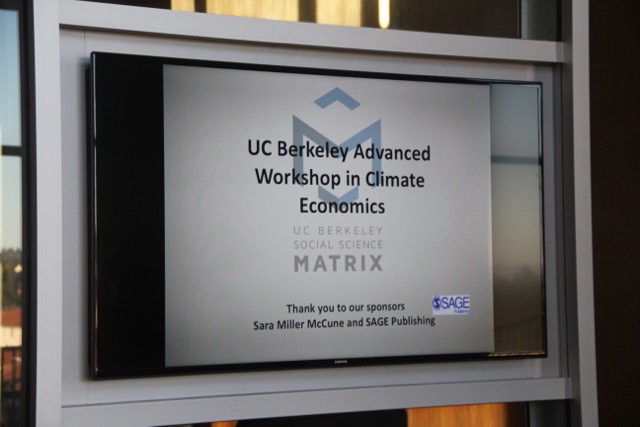
Matrix Hosts Advanced Workshop in Climate Economics

Social Science Matrix was honored to host the Advanced Workshop in Climate Economics, with support from Sage Publications and Sara Miller McCune.

UC Berkeley’s Social Science Matrix was honored to host the Advanced Workshop in Climate Economics, with support from Sage Publications and Sara Miller McCune. This two-day conference brought together leading climate economists from around the world, with representatives from UC Berkeley, Harvard, Stanford, the University of Chicago, MIT, and others, for two days of research presentations and dialogue around methodology, modeling, and future collaborations. The 2018 Advanced Climate Economics Workshop was made possible with a generous contribution from SAGE Publishing and Sara Miller McCune.

The workshop was hosted by the Berkeley Climate Economics Group, which is led by David Anthoff, from UC Berkeley’s Energy and Resources Group, Max Auffhammer, from the Department of Agricultural and Resource Economics & International Area Studies, and Solomon Hsiang, from the Goldman School of Public Policy. Social Science Matrix has supported the work of these researchers since 2015; they have convened a summer workshop and two Matrix Research Teams focused on using economics to understand the potential impacts of climate change in the U.S. and around the world.

The goal of the Advanced Workshop in Climate Economics was to explore recent advances in climate economics, with an emphasis on the linkage between empirical and numerical modeling methods. One major stated goal of the workshop was to bring junior and senior researchers together. The final program consisted of presentations from an outstanding group of invited leading senior researchers, as well as a select group of junior researchers (PhD students and post-doctoral students).

Day 1

The first day focused on three themes: climate impacts at the macro and micro scales, geoengineering, and storms. Dalavane Diaz, from the Electric Power Research Institute, kicked off the day with a fascinating study on the national scale impacts of climate change on heating and cooling demand in the built environment. She presented work on a large-scale technometric model that has the ability to simulate the impact of socioeconomic changes and climate change on energy demand from buildings. Her analysis finds that energy efficiency and prices will drive down the overall demand for energy, yet climate change will offset some of these gains.

Massimo Tavoni, the chief climate economist of the European research network FEEM, presented research on the future of climate engineering (also known as geoengineering), the deliberate manipulation of the earth’s climate system to mitigate climate change. He argued that nations should begin to make agreements to govern how and where such technologies are used.

Michael Greenstone, who formerly served as Chief Economist on President Obama’s Council of Economic Advisors, presented a fascinating study on the feasibility of growing food crops in North America. He linked a large data set on crop yields with extensive temperature data and analyzed which areas will still profitably grow soy, wheat, and corn by the end of the century.

Matthew Gammans, a PhD student from UC Davis, presented work on the impacts of climate change on French wheat yields. His paper represents a major technical step forward in allowing researchers to empirically disentangle how farmers respond to changes in weather (day-to-day fluctuations) relative to changes in climate (i.e. long-run changes in weather). His paper proposes a simple framework to separate these two effects, and he finds that for French wheat, there is a difference in the two responses, although the difference is much smaller than previously thought.

Tony Smith, Professor of Economics at Yale, is a new member of the climate economics community, and he presented his first foray into the climate impacts literature. He built a highly disaggregated model of economic activity at the global scale, which allows one to estimate impacts on gross domestic product at the pixel scale. This new modeling framework provides a meaningful avenue to model the impacts of international trade and other general equilibrium responses on global economic activity.

Will Rafey, a graduate student at MIT, presented work on the potential economic impacts of geoengineering. His paper, together with that of Massimo Tavoni, started an engaging conversation on the institutions required for a global effort to engineer the climate. Some forms of geoengineering are very cheap (e.g. pumping sulfates into the atmosphere), but the consequences are not well understood. These papers are pushing this frontier forward.

Lint Barrage, a rising star and Professor of Economics at Brown University, and Mariia Belaia, a postdoctoral scholar at Harvard, presented work on the impacts of storms and variation in the monsoon on economic activity. This work shines light on the tremendous negative impact of storms at the economy level, and attempts to measure the long-run consequences of these events, which are projected to increase in intensity as a result of climate change.

Day 2

The second day of the workshop focused largely on estimating the impacts of climate change through diverse methods.

Richard Newell, former member of the Council of Economic Advisors, chief administrator of the Energy Information Administration, and current president of Resources for the Future, presented new work on estimating the impacts of climate change on GDP, using methods from the statistical literature on forecasting. His paper shows how sensitive impact estimates are to the choice of mathematical relationships used to project them.

UC Berkeley graduate student Hannah Druckenmiller presented new work that will allow future generations of researchers to use simple methods from time series analysis in a spatial context. Her research has potential to save tens of thousands of computing and coding hours and increase the precision of empirical climate impacts estimates.

Frances Moore and Solomon Hsiang brought the academic portion of the workshop to a close. Frances’ paper shows that, if one updates a model used by the EPA to calculate the social cost of carbon (SCC) using the most recent science on how agriculture responds to changes in temperature, the SCC more than doubles. This encouraged everyone in the room to engage in efforts to update other components of these models. Sol Hsiang’s paper, meanwhile, showed off an amazing effort at collecting any household level consumption survey ever taken and relating it to temperature. His research is a work in progress, but suggests that hotter temperatures will lead to decreases in consumption around the world.

The closing keynote, “U.S. Climate Policy Whiplash: Recent Developments and Current Outlook,” was delivered by Trevor Houser, a partner at the Rhodium Group who formerly served as the chief architect of Hillary Clinton’s environment and energy platform. As Professor Auffhammer pointed out, more people voted for this platform than any other environmental platform in the history of the U.S. In his sobering talk, Houser laid out the myriad challenges that the U.S. energy system will face over the next 30 years. Even given the advances in renewable energy technology and their costs, the required rate of turnover in capital needed to affect significant change is astronomical. He outlined a number of points that receptive administrations could adopt in order to make significant progress.

Participants lauded the breadth of papers and felt inspired to push the frontier forward. Indeed, one of the most significant takeaways was the widely expressed need to continue collaborations, and ensure there is an ongoing forum for this work. Professors Anthoff, Auffhammer, and Hsiang are committed to continuing and expanding their work in the future.

Matrix News

Matrix/Sciences Po Collaboration Grants Announced

Four teams of scholars from the U.S. and France will use seed funding to tackle globally significant, cross-disciplinary research questions in the social sciences.

matrixsciencespo

UC Berkeley’s Social Science Matrix and Sciences Po, a premier university based in Paris, France, are pleased to announce the recipients of an inaugural set of grants designed to encourage collaboration between scholars from the two institutions. Through the Matrix-Sciences Po Collaboration Grants program, each institution has committed to provide a pool of funding to enable graduate students and faculty members to work together on a cross-institutional basis.

Sciences Po and UC Berkeley are two of the world’s leading centers of research in the social sciences; both are home to renowned experts in public health, urban development, security, environmental policy, and other pressing 21st-century issues. Four teams of scholars were selected to receive grants following evaluation by faculty review boards from the two partner institutions. Projects were selected in part for their potential to lead to ongoing partnerships; contribute to their home departments, schools, or programs; and create opportunities for graduate students to participate. In addition to funding, Matrix and Sciences Po will each provide meeting and work space for successful applicants, as well as administrative support and other services.

Below are summaries of the projects that will be funded through the inaugural Matrix/Sciences Po Collaboration Grants:

The Hissène Habré Trial: A New Model for Prosecuting International Crimes in National Courts?

In this cross-disciplinary collaboration, researchers from UC Berkeley and Sciences Po will examine the role of national courts in providing accountability for international crimes in Africa. Their research is focused on the trial of Chad’s former president, Hissène Habré, who was convicted of crimes against humanity, torture, and war crimes before the Extraordinary African Chambers, a novel judicial mechanism born out of an agreement between Chad, Senegal, and the African Union.

The team’s members will use their grant to work on a book that is scheduled to be published by Oxford University Press in early 2019. The book will present the history and significance of the Habré case, highlight direct actors’ perspectives and practical experiences of the trial, and offer academic analysis of the trial in the broader context of international criminal law generally.

“As researchers, we were interested in how this trial actually happened and what aspects, if any, are replicable,” the scholars wrote in their proposal. “In early 2017, we interviewed the trial’s direct actors—mostly Senegalese and Chadian lawyers, judges, journalists, funders, and civil society actors who operationalized the trial. In doing so, we documented the practical and political realities affecting their day to day work. Now, with an invitation from Oxford University Press to produce an edited volume of direct actors’ perspectives and broader academic analysis, we will make a significant contribution to understanding of not only this trial but also potential models for the domestic prosecution of international crimes in Africa and beyond.”

Participating scholars from UC Berkeley include Eric Stover, Adjunct Professor in Law and Public Health and Faculty Director of the Human Rights Center; and Kim Thuy Seelinger, Lecturer in Law and Director of the Sexual Violence Program at the Human Rights Center. Collaborators from Sciences Po include Horatia Muir Watt, Professor and Co-Director of the Global Governance Studies Program; Jeremy Perelman, Assistant Professor at the Sciences Po Law School; and Dr. Sharon Weill, Senior Lecturer at the Paris School of International Affairs (PSIA) and Associate Researcher at Sciences Po’s Centre de Recherches Internationales (CERI).

The Social Life of the Sediment Balance: A Social and Geomorphic Approach to the Transformation of River Systems and Deltas

This collaborative project will explore the social and natural processes that lead to the modification of sediment balance in rivers. Interdisciplinary scholarship on river systems and society is usually concerned with water flows, but rarely with sediment balance. Sediments, however, are essential components of river systems. Hydroelectric dams, canals, navigation, sand and gravel mining, and other human uses alter sediment fluxes, often with detrimental consequences on the river morphology and ecology as well as on coastal land.

The project will bring together two scholars with different perspectives on this topic: Giacomo Parrinello, Assistant Professor of Environmental History at the Centre for History at Sciences Po (CHSP), brings a social science and history background, while G. Mathias Kondolf, Professor of Environmental Planning and Geography in UC Berkeley’s Department of Landscape Architecture and Environmental Planning, is an expert in the geomorphology of river systems. The collaborators, who reached out to each other for the first time as a result of this grant program, will explore how the dynamics of the river systems are shaped by policy, institutional, and legal frameworks. They will focus their research on diverse river basins, such as the Rhône, the Po, the Mekong, the Mississippi-Missouri system, the Colorado, and the Sacramento.

“The collaborating faculty have both developed an interest in the intersection of sociotechnical and geomorphological processes in river systems, and aim to combine their expertise to shed new light on a key aspect of human-environment interaction in fluvial environments,” the scholars explained in their proposal. “By systematically compiling geomorphic data on these river systems, their historical transformations, and resulting channel responses, with a social-science-based analysis of the governance context, we hope to push forward interdisciplinary efforts to better understand these transformed river systems and how they can be best managed.”

Diasporic Identities: Southeast Asian Incorporation Experiences in Europe and America—The Post-Refugee Generations

In the four decades since the initial mass resettlement of refugees from Vietnam, Laos, and Cambodia, the Southeast Asian communities in Europe and the U.S. have registered a significant demographic shift. Yet surprisingly little scholarly attention has been paid to these communities. A team of researchers from UC Berkeley and Sciences Po will use a Collaboration Grant to convene European and American researchers working on Vietnamese, Cambodian, and Laotian diasporas to engage in critical, cross-disciplinary discourse on the post-refugee generations.

“Despite the resurgent attention to immigration issues in Europe in recent years, we know little of the integration experiences of these earlier but relatively recent refugee communities in Europe,” the researchers explained in their proposal. “In particular, we have virtually no knowledge of the post-refugee generations that are an integral part of the French cultural, political, economic, and social fabric. These knowledge gaps deprive us of critical insights that would be relevant and invaluable in view of the current refugee situations in Europe, and the intensifying debates engendered by demographic and cultural shifts both in the U.S. and in France….”

Leading the collaboration are Khatharya Um, Associate Professor and Coordinator of Asian American and Asian Diaspora Studies in the Department of Ethnic Studies at UC Berkeley, and Hélène Le Bail, a political scientist on the permanent faculty at Sciences Po and a research fellow at the Centre de Recherches Internationales (CERI). Um is currently working on a book project on Southeast Asian diaspora; she has completed her research on the communities in the U.S. and is deepening her research on the communities in France. Le Bail’s previous scholarly focus on Chinese migration has evolved into her current research interest in second-generation Sino-Vietnamese populations in France.

“We envision this initiative as paving the way for more extensive exchange and research collaboration not only between Berkeley and Sciences Po but also with other universities in France and Europe, and generation of new scholarship and publications, including a co-edited volume,” the scholars explained. “Ultimately, we hope to foster a robust transcontinental community of scholars, researchers, artists, and advocates working on critical Southeast Asian diaspora studies, a space that is emerging in the U.S. but currently does not exist in Europe. With its attention to transnational and diasporic concerns, this future transnational community would provide a much needed home for new innovative scholarship that is not focused singularly on Southeast Asia, and that brings critical approaches and inquiries to both area studies, and to diaspora, transnational, and community studies.”

Political Representation in India: The Berkeley-Sciences Po Indian Legislators Project

This project aims to understand the profiles of national and state legislators and the changing nature of political representation in India. The collaboration will bring together scholars from UC Berkeley and Sciences Po who have each developed unique research approaches to understanding Indian politics, and will integrate previous major data collection efforts related to politicians in India.

“We see this grant as an opportunity to bring together our shared interests to maximize the synergies and quality of our research output,” the researchers wrote in their proposal, “and to initiate what may be a broader and longer term research partnership focused on the political behavior of India’s state and national legislators.”

Based at Sciences Po, Christophe Jaffrelot, a Senior Research Fellow at Centre de Recherches Internationales, is building a major database on the sociological profile of Indian national and state legislators, including information on caste, class, gender, and family backgrounds. These data are critical for assessing trends in the democratization of political and descriptive representation in India and also allow assessment of legislators’ political trajectories, for instance, the extent to which they shift from one party to another or belong to dynastic political families.

From UC Berkeley, Jennifer Bussell, Gruber Assistant Professor in the Department of Political Science and the Goldman School of Public Policy, focuses her research on political representation, service delivery, and the political economy of corruption in India; she recently completed a book manuscript on the constituency service provided by state and national legislators in that country. Bussell has used data collected by Jaffrelot and collaborators to assess the relationship between caste background and political responsiveness.

Adding to the collaboration, Thad Dunning, Robson Professor of Political Science at UC Berkeley and Director of the Center on the Politics of Development, is a scholar of comparative politics with an emphasis on distributive politics, ethnic politics, and political economy. He research focuses on the distributional impact of political reservations (electoral quotas for marginalized castes) in village councils in India, and provides an important foundation for understanding the relationships between local brokers and the higher-level legislators studied by Bussell and Jaffrelot.

“We envision that our collaboration will integrate our previous research in novel ways,” the researchers explained. “Overall, our goal is to combine our previous separate efforts in a productive manner to produce a more comprehensive understanding of the ways in which social background does, and does not, affect the manner by which Indian politicians engage with their constituents and serve as effective representatives. More generally, we expect that this may serve as a starting point for a broader research agenda on the political behavior of India’s legislators, writ large.”

Grants and Opportunities

Request for Proposals: Sciences Po Collaboration Grants

Social Science Matrix is partnering with Sciences Po, a premier university based in Paris, France, to provide seed funding for collaborative partnerships between scholars from the two universities. UC Berkeley faculty members are invited to submit applications for Matrix/Sciences Po Collaboration Grants, to be used to fund activities that will support this program’s goals.
Screen Shot 2017-10-17 at 1

Social Science Matrix is partnering with Sciences Po, a premier university based in Paris, France, to provide seed funding for collaborative partnerships between scholars from the two universities. UC Berkeley faculty members are invited to submit applications for Matrix/Sciences Po Collaboration Grants, to be used to fund activities that will support this program’s goals.

The primary goal of this initiative is to support collaborations between two of the world’s premier centers for social science research: UC Berkeley and Sciences Po, which is based in Paris and has campuses in multiple locations across France.

Social Science Matrix has a mission to support groundbreaking, cross-disciplinary social science research, and we are committed to extending this mission beyond the campus through meaningful partnerships with institutions around the world. Sciences Po has a similarly global outlook, and is one of the world’s leading centers for the study of important global challenges like public health, urban development, security, environmental policy, and other topics. The partnership has potential to lead to valuable research that will have a lasting impact on important 21st-century issues.

We anticipate making Seed Grants of up to $5,000 for each project, to support collaborations starting as early as January 2018. Eligible projects may vary in timeframe and scope (though funds must be used by June 30, 2019); we encourage applicants to seek complementary funding if needed, for example from the France-Berkeley Fund. Applicants are asked to elaborate the best method for collaboration and exchange according to their respective discipline, theme, or the constituency the grant will serve. These activities may include but are not limited to:

  • Faculty exchanges
  • Research seminars designed to generate new research strategies
  • Workshops for faculty and students

In addition to receiving funding, UC Berkeley faculty members who spend time in France through this initiative will be provided with meeting and office space at their chosen location. Matrix will also provide administrative support and help publicize the work of a project team if desired.

We anticipate making Seed Grants of up to $5,000 for each project, to support collaborations starting as early as January 2018. Activities may include but are not limited to: faculty exchanges, research seminars, and workshops for faculty and students. Collaborations may be new, or they may be new initiatives launched by past collaborators. Proposals are due on November 30, 2017 by 11:59pm PDT.

Visit This Page for More Information