



Matrix On Point
REGISTER

Event Date: October 28th, 2026
3:30pm-5:00pm
Matrix on Point: The State of U.S. Immigration Enforcement and Surveillance
Federal immigration enforcement in the United States is increasingly shaped by the convergence of surveillance technologies, data systems, and on-the-ground policing practices. This panel will bring together a group of scholars from diverse disciplines to examine the social and political consequences — and the stakes for rights in an era of technological governance.
Learn More >Grants and Opportunities
News

Published May 23, 2017
2017-2018 Matrix Research Teams Announced
Social Science Matrix is pleased to announce our 2017-2018 Matrix Research Teams, groups of scholars from across disciplines who will investigate issues ranging from human rights and immigration to infrastructure, digital privacy, and communication between physicians and patients.
Learn More >Other Events
Recap
Published May 22, 2017
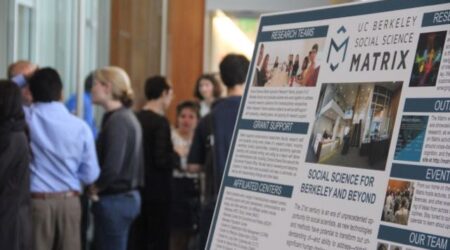
2017 Matrix Open House
On May 4, 2017, Social Science Matrix held an Open House to celebrate the end of the academic year. Check out our gallery of images and video of introductory remarks by William Hanks, Director of Social Science Matrix.
Learn More >Matrix Lecture
Recap

Published May 22, 2017
An Orderly Mess: Helga Nowotny
View the video of the 2017 Social Science Matrix Distinguished Lecture, presented by Helga Nowotny, Professor emerita of Science and Technology Studies, ETH Zurich, and a founding member of the European Research Council.
Learn More >Inequality
Article

Published May 2, 2017
Bikes and the Changing City
UC Berkeley Geography Lecturer John G. Stehlin reflects on using the bicycle as a lens to understand gentrification and local inequities.
Learn More >Health
Article
Published March 16, 2017
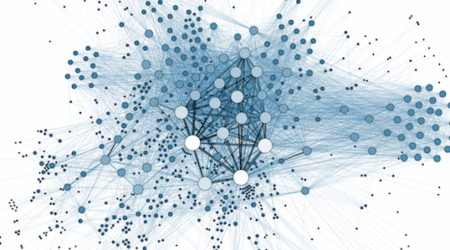
Network Survival Method
Dennis Feehan, Assistant Professor in the UC Berkeley Department of Demography, explains a pioneering approach to predicting adult mortality.
Learn More >Other Events
Recap
Published March 9, 2017
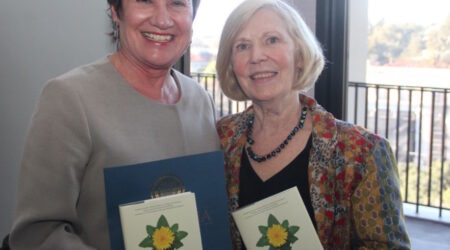
Clair Brown, “Buddhist Economics”
On March 2, 2017, Clair Brown, Professor of Economics and Director of the Center for Work, Technology, and Society at UC Berkeley, discussed her new book, Buddhist Economics: An Enlightened Approach to the Dismal Science.
Learn More >