


REGISTER
Corruption is a persistent challenge in America, shaping institutions, influencing policy, and eroding public trust. Understanding its roots, mechanisms, and consequences is essential for assessing the health of democratic governance. This panel, to be held on Tuesday, February 3, brings together leading scholars from business, political science, and law to examine the many facets of corruption in the United States and the ways it is identified, constrained, and addressed.
The panel will feature Ernesto Dal Bó, Phillips Girgich Professor of Business at the UC Berkeley Haas School, Sarah Anzia, Chancellor’s Professor of Public Policy and Political Science at UC Berkeley, and Erwin Chemerinsky, Jesse H. Chopper Distinguished Professor of Law and Dean of the UC Berkeley Law School. Sean Gailmard, Herman Royer Professor of Political Economy, will moderate.
Panelists
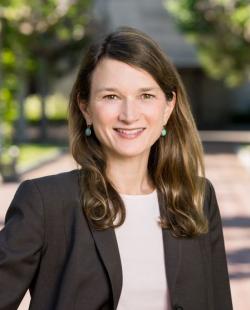
Sarah Anzia studies American politics with a focus on state and local government, elections, interest groups, political parties, and public policy. She is the author of Local Interests: Politics, Policy, and Interest Groups in US City Governments (University of Chicago Press, 2022), which evaluates the political activity of interest groups in US local governments and how interest groups shape local public policies on housing, business tax incentives, policing, and public service provision more broadly. Her first book, Timing and Turnout: How Off-Cycle Elections Favor Organized Groups (University of Chicago Press, 2014), examines how the timing of elections can be manipulated to affect both voter turnout and the composition of the electorate, which, in turn, affects election outcomes and public policy. She has also written about the political activity and influence of public-sector unions, the politics of public pensions, policy feedback, women in politics, political parties, and the historical development of electoral institutions. Her work has been published in the American Political Science Review, the American Journal of Political Science, the Journal of Politics, and other scholarly journals. She has a PhD in political science from Stanford University and an MPP from the Harris School at the University of Chicago.
 Ernesto Dal Bó is a political economist interested in governance broadly understood. His research focuses on a range of topics: political influence, social conflict, corruption, morality and social norms, state formation, the development of state capabilities, and the qualities and behavior of politicians and public servants. Most of his teaching takes place in the Berkeley MBA program and at the doctoral level where he teaches courses on political economy.
 Erwin Chemerinsky became the 13th Dean of Berkeley Law on July 1, 2017, when he joined the faculty as the Jesse H. Choper Distinguished Professor of Law. Prior to assuming this position, from 2008-2017, he was the founding Dean and Distinguished Professor of Law, and Raymond Pryke Professor of First Amendment Law, at University of California, Irvine School of Law. Before that he was the Alston and Bird Professor of Law and Political Science at Duke University from 2004-2008, and from 1983-2004 was a professor at the University of Southern California Law School, including as the Sydney M. Irmas Professor of Public Interest Law, Legal Ethics, and Political Science. From 1980-1983, he was an assistant professor at DePaul College of Law. He is the author of nineteen books, including leading casebooks and treatises about constitutional law, criminal procedure, and federal jurisdiction. His most recent major books are Worse than Nothing: The Dangerous Fallacy of Originalism (2022) and Presumed Guilty: How the Supreme Court Empowered the Police and Subverted Civil Rights (2021). In 2016, he was named a fellow of the American Academy of Arts and Sciences. In 2024, National Jurist magazine again named Dean Chemerinsky as the most influential person in legal education in the United States. In 2022, he was the President of the Association of American Law Schools. He received his B.S. at Northwestern University and his J.D. at Harvard Law School.
 Sean Gailmard studies how political institutions operate, change, and affect governance quality. His work focuses particularly on the US executive branch, checks and balances across branches of government, bureaucratic capacity, and the evolution of US institutions. Gailmard applies strategic and historical perspectives to these issues. Professor Gailmard is the author of Agents of Empire: English Imperial Governance and the Making of American Political Institutions, as well as Learning While Governing: Expertise and Accountability in the Executive Branch (winner of Best Book awards from APSA sections on Political Economy and Public Administration) and Statistical Modeling and Inference for Social Science, a Ph.D.-level textbook. He has published research in leading social science journals, including the American Political Science Review, American Journal of Political Science, and Journal of Politics.