Higher education is facing mounting pressures, from political intervention and financial challenges to attacks on academic freedom. These tensions are visible in the University of California system, where debates over funding, governance, labor, and public mission are increasingly shaping the future of public universities. This panel brings together leading scholars to examine the forces challenging public higher education today. Drawing on areas spanning finance, policy, and labor, the discussion will explore how these dynamics are shaping the UC System, and what is at stake for students, employees, the public, and the future of higher education.
This panel will feature Charlie Eaton, Associate Professor of Sociology at UC Merced; Katherine Newman, Chancellor’s Distinguished Professor of Sociology and Public Policy at UC Berkeley and Provost and Executive Vice President of Academic Affairs at the University of California; and Juan Pablo Pardo-Guerra, Professor of Sociology at UC San Diego. The panel will be moderated by Christopher Kutz, C. William Maxeiner Distinguished Professor of Law.
Co-sponsored by the UC Berkeley School of Education, the Center for Studies in Higher Education (CSHE), and the Departments of Anthropology, Geography, and Sociology.
Panelists
 Charlie Eaton is an Associate Professor of Sociology at UC Merced, where he co-founded the Higher Education, Race, and the Economy (HERE) Lab. Eaton’s research investigates the role of politics, organizations, and race in the interplay between economic elites and insurgent social groups. He asks such questions as, what forms of organization support elite efforts to consolidate power in politics and the economy? And, what are effective organizational strategies by which non-elites can achieve more equitable distributions of power, wealth, and status?
His book, Bankers in the Ivory Tower (University of Chicago Press, 2022), is about finance and higher education as two central and overlapping domains in which elites and non-elites vie for status and resources. Beginning in the 1980s, the government, colleges, students, and their families took on multiple new roles as financial investors, borrowers, and brokers. The turn to finance, however, has yielded wildly unequal results. At the top, ties to Wall Street helped the most elite private schools achieve record endowment growth through hedge fund investments and the support of wealthy donors. At the bottom, takeovers by private equity transformed for-profit colleges into predatory organizations that leave disadvantaged students with massive loan debt and few educational benefits. And in the middle, public universities have been squeezed between incentives to increase tuition and pressures to maintain access and affordability. This organizational inequality has both exploited and magnified racial inequalities in household wealth and economic opportunity. This research has been covered by The New York Times, The Washington Post, TIME, Newsweek, CNBC, Forbes, The Nation, Institutional Investor, Market Watch, The Chronicle of Higher Education, and Inside Higher Ed.
In ongoing research, Charlie Eaton is investigating the role of finance and race in online higher education, public university enrollment patterns, and in other domains, such as healthcare and taxation. Across this research, he employs techniques in data carpentry to digitize, link, and construct original data for measuring racial, class, and organizational inequalities. With his collaborators at the HERE Lab, he publishes code and data from this work at the Higher Ed Data Hub.
 Katherine Newman became the Provost and Executive Vice President of Academic Affairs at the University of California in January of 2023. She was simultaneously appointed as the Chancellor’s Distinguished Professor of Sociology and Public Policy at UC Berkeley.
Dr. Newman was previously the University of Massachusetts System Chancellor for Academic Programs, the Senior Vice President for Economic Development and the Torrey Little Professor of Sociology at UMass Amherst, and prior to that, the James B. Knapp Dean of the Arts and Sciences at Johns Hopkins University.
Dr. Newman is the author of sixteen books on topics ranging from technical education and apprenticeship to the sociological study of the working poor in America’s urban centers, middle class economic insecurity under the brunt of recession, and school violence on a mass scale. She has written extensively on the consequences of globalization for youth in Western Europe, Japan, South Africa and the US, on the impact of regressive taxation on the poor, and on the history of American political opinion on the role of government intervention.
Dr. Newman has served as the Forbes Class of 1941 Professor of Sociology and Public Affairs and Director of the Institute for International and Regional Studies at Princeton, the founding Dean of Social Science at the Radcliffe Institute of Advanced Study and the director of Harvard’s Multidisciplinary Program on Inequality and Social Policy, where she served as the Malcolm Weiner Professor of Urban Studies in the Kennedy School of Government. She taught for 16 years in the Department of Anthropology at Columbia University and for two years in the School of Law at UC Berkeley.
Her latest publication, coauthored with Dr. Elisabeth Jacobs, a senior fellow in the Center on Labor, Human Services and Population at the Urban Institute, entitled Moving the Needle: What Tight Labor Markets Do for the Poor, was published in March 2023. Her current project, in collaboration with UC Berkeley doctoral student Evelyn Bellew, examines the unionization of foreign auto/bus manufacturing plants in Alabama, among the first successful efforts at collective bargaining in this sector in the US South.
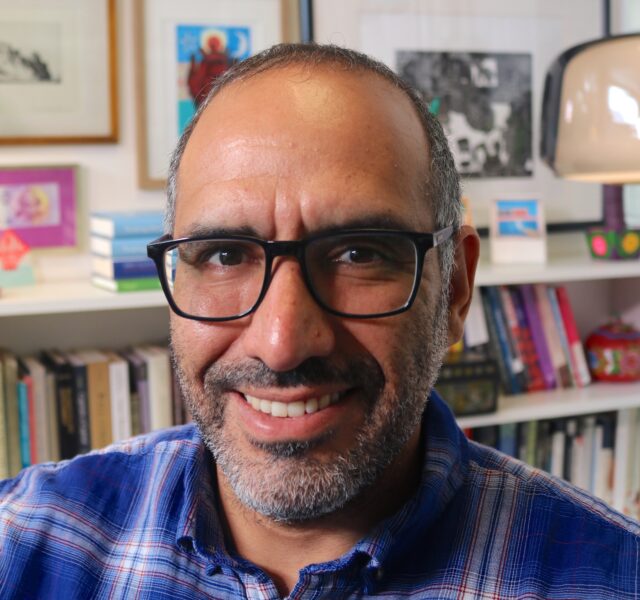 Juan Pablo Pardo-Guerra is a Professor in Sociology at UC San Diego, a founding faculty member of the Halicioğlu Data Science Institute, co-founder of the Computational Social Science program at UCSD, and Associate Director of the Latin American Studies Program at UC San Diego. His research concerns markets and their location in contemporary societies with an emphasis on finance, knowledge, and organizations. In Automating Finance: Infrastructures, Engineers and the Making of Electronic Markets (Cambridge University Press, 2019), for example, he examines the organizational and political tensions at play in developing some of the key infrastructures of British and American stock markets that automated trading in the late twentieth century. By looking at how experts in telecommunications created novel niches within stock exchanges, Automating Finance shows how these technical workers slowly transformed both the devices and cultures of their organizations, enabling the transition from trading floors to purely electronic exchanges. Automating Finance combines insights across fields, from the theoretical insights from science and technology studies and the analytical lenses of institutional theory, to anthropological discussions of relations and the economic metaphors of market design. Shifting emphasis to processes of marketization in higher education, his most recent book, The Quantified Scholar: How Research Evaluations Transformed the British Social Sciences, studies labor markets in the British academia, demonstrating how market-like interventions of quality assessment introduced in the 1980s transformed the practices, career structures, and disciplines of anthropologists, economists, political scientists, and sociologists working in the United Kingdom. The book is based on a methodological innovation that synthesizes computational techniques with the ethnographic logic of the extended case study. Juan Pablo was trained in physics at the Universidad Nacional Autonoma de Mexico and Science and Technology Studies at the University of Edinburgh. He has held positions at the London School of Economics and Political Science, the Museu Nacional of the Universidade Federal de Rio de Janeiro, and the University of California San Diego. Juan Pablo’s work has been published in Economy & Society, Journal of Cultural Economy, European Societies, Cultural Sociology, Theory & Society, and the British Journal of Sociology.
 Christopher Kutz (moderator) joined the Jurisprudence and Social Policy Program at Berkeley Law in 1998. Before joining the Berkeley faculty, he clerked for Judge Stephen F. Williams of the U.S. Court of Appeals for the District of Columbia. Since his appointment at Berkeley, he has been a Visiting Professor at Columbia and Stanford law schools, as well as at Sciences Po University in Paris, France.
Kutz’s work focuses on moral, political and legal philosophy, and he has particular interest in the foundations of criminal, international and constitutional law. His book, Complicity: Ethics and Law for a Collective Age, (Cambridge University Press, 2000), addressed the question of individual moral and legal responsibility for harms brought about through collective and corporate activity. His 2016 book, On War and Democracy (Princeton University Press), addresses the collision between democratic values and the ethics and laws of war; it addresses both questions of when democratic states can engage in war, such as for purposes of humanitarian intervention, and what limits democratic commitments place on their means, such as torture and drone strikes. In addition, he has written on issues of the metaphysics of criminal responsibility, social welfare obligations, national responsibilities to mitigate climate change, humanitarian ethics, and political legitimacy. He teaches courses in criminal law, and moral, political and legal philosophy.
Kutz’s publications include “The Collective Work of Citizenship” in Legal Theory (2002); “Justice in Reparations: The Cost of Memory and the Value of Talk” in Philosophy & Public Affairs (2004); “The Difference Uniforms Make: Collective Violence in Criminal Law and the Law of War.”Philosophy & Public Affairs (2005); “The Lawyers Know Sin: Complicity in Torture,” ed. Karen J. Greenberg, The Torture Debate in America (New York: Cambridge University Press, 2006); “Secret Law and the Value of Publicity,” Ratio Juris 22: 197-217 (2009); “Democracy, Defense and the Threat of Intervention.” In Justifying National Defense, eds. Cécile Fabre and Seth Lazar (Oxford: Oxford University Press, 2014). “How norms die,” Ethics and International Affairs (2014).
View Map




 Mathematicians and engineers of the 1940s set out to design machines that could act as ideal rational agents in the face of uncertainty. In this pursuit, a cluster of foundational mathematical technologies — including information theory, linear programming, game theory, and neural networks — emerged as a foundation for a mathematical formalization of rationality, reshaping how we think about human decision-making itself. The Irrational Decision traces how a narrow mathematical framework for computing came to define rationality in economics, public policy, and popular culture.

 Barry Eichengreen
 Rohan Kekre


 In Incommunicable, Charles L. Briggs examines the long-standing presumptions that medical discourse translates easily across geographic, racial, and class boundaries. Bringing linguistic and medical anthropology into conversation with Black and decolonial theory, he theorizes the failure in health communication as incommunicability, which negatively affects all patients, doctors, and healthcare providers. Briggs draws on W. E. B. Du Bois and the work of three philosopher-physicians—John Locke, Frantz Fanon, and Georges Canguilhem—to show how cultural models of communication and health have historically racialized people of color as being incapable of communicating rationally and understanding biomedical concepts. He outlines incommunicability through a study of COVID-19 discourse, in which health professionals defined the disease based on scientific medical knowledge in ways that reduced varieties of nonprofessional knowledge about COVID-19 to “misinformation” and “conspiracy theories.” This dismissal of nonprofessional knowledge led to a failure of communication that eroded trust in medical expertise. Building on efforts by social movements and coalitions of health professionals and patients to craft more just and equitable futures, Briggs helps imagine health systems and healthcare discourses beyond the oppressive weight of communicability and the stigma of incommunicability.


 Armando Lara-Millán


 Anna Feign
 Andrea Lara-García
 Sophia Perez




 Roshanak Kheshti
